
You can download the original 7-page document here (.pdf)

“Chafer Beetle/Grub Solutions that put Nature & the Environment First”
Developed by: Lawns to Life Committee
Our Goal:
This document is to provide people with a variety of wildlife & environmentally conscious solutions to either maintain/save (see questions 1 below), alter (see question 2 below), or replace (see question 3 below), lawns affected by chafer beetle grubs.

Understanding the Chafer Beetle

Wondering what’s killing your lawn? Read this:
The culprit may be the European Chafer Beetle, a lawn pest introduced to the Lower Mainland in 2001. The larvae (grub) stage has been damaging traditional turf lawns ever since.
- Grub appearance: White, C-shaped, with a blackish end, about 2 cm long
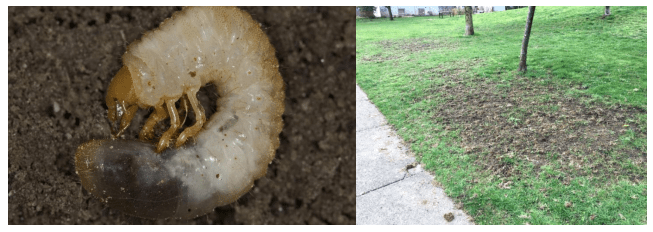
Above: The offending grub and evidence of damage
Signs of an Infestation:
- Brown patches or spongy areas in your lawn
- Sod being pulled back or divots caused by nature’s pest controllers like birds, skunks,and raccoons searching for grubs
(NOTE: it is not legal or acceptable to harm or kill wildlife for accessing a food source in your lawn)
- Lifecycle:
o June: Adult beetles emerge, mate and lay eggs in lawn thatch
o Summer to Spring: Grubs live in the soil, feeding on grass roots
o May/June: Pupation occurs, and the cycle repeats
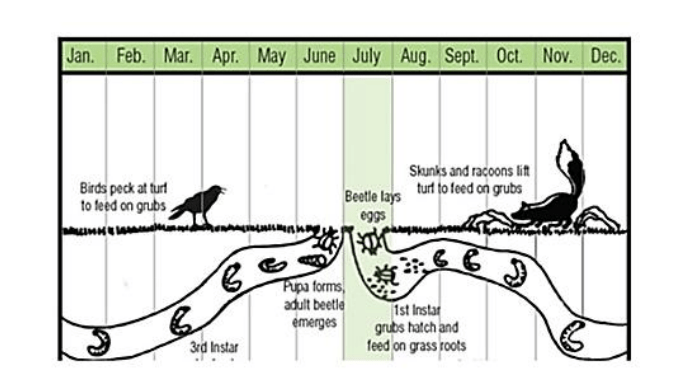
Life cycle of the chafer beetle (from City of Delta website)
Solutions
1. Question: Do you want to maintain or save a traditional turf lawn?
If you want to keep your lawn while also preventing or eliminating chafer beetle damage, consider these eco-friendly options:
Infestation prevention – Maintenance & Lawn Care Tips
- Keep grass long (up to 8 cm) to reduce vulnerability
- Aerate and dethatch your lawn to promote root health
- Use a mulching mower (or blade) to return nitrogen to the soil naturally – this does not increase thatch
- If an infestation is present and turf has been dug up by wildlife, waiting until spring to rake it and reseed it, can be a good option
Infestation elimination/control – Biological Control
- Nematodes (read package instructions): Microscopic parasites that consume chafer beetle larvae in their early stages
o Apply: as early as mid-July and into September if the soil is still warm
o Water: Requires 5-7 days of lawn moisture (you may need a Watering Exemption Permit from your city)
o Results: grubs should disappear in 2-3 weeks
o Available: at garden centers and retail outlets like West Coast Seeds
o Brands: Nemasys G & Larvanem
- BTG (Biological Pesticide): a naturally occurring soil bacteria (bacillus thuringiensis galleriae)
o Apply: Spring, later in Summer & early Fall – more flexible in terms of timing than nematodes –– follow directions on the package
o Water: thoroughly after application (a Watering Exemption Permit may be required)
o Available: at garden centres and hardware stores
o Brand: Scotts Grub BGon Max Grub Killer
o An alternate commercial formula is available for use by licensed professionals
Physical Barriers
- Netting or metal mesh: Could prevent wildlife from digging up your lawn but will not prevent or eliminate a grub problem. If there is evidence of an infestation, one of the treatments above should be applied
o Some folks leave these barriers down permanently with grass growing through them
What to Avoid

Avoid chemical insecticides (potentially harmful to people, pets, wildlife & environment)
Artificial turf is not recommended (no ecological value)
2. Question: Do you want an alternative to traditional turf?
If you prefer the look of a lawn without the risk of chafer beetle damage, try these options: Chafer-Resistant Lawn Alternatives – these don’t provide the thatch that the grubs need:
- Chafer Beetle Resistant Lawn Blend (West Coast Seeds) – suitable for foot traffic. Check out the rest of their lawn alternative seed blends . Some have the added benefit of helping pollinators
- Bee-Friendly Flowering Mix (Premier Pacific Seeds) – pollinator-friendly and low growing. Click here for retail locations
- Drought-Tolerant Lawn Replacement Options (Grow Green Guide):
o A few examples: moss, creeping thyme, ornamental grasses, sedum, Dutch-white & micro-clover

Tip: It is advisable to remove the old lawn and treat for grubs before reseeding
with an alternative blend. Check soil for grubs before planting.
Benefits: Less watering, less mowing, may support pollinators,
and requires no chemical fertilizers.
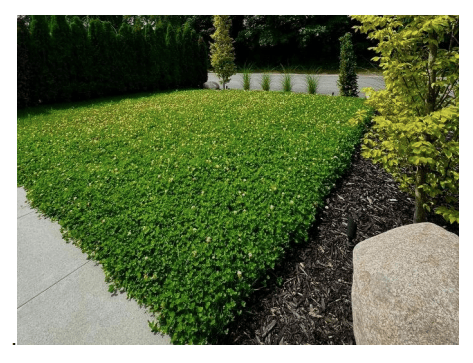
A local success story: One resident of Tsawwassen combined the
West Coast Seeds Chafer Beetle Blend with Micro-clover,
White Yarrow and White-bellis English Daisy and is very happy
with the results (see photo).
3. Question: Do you want a “Habitat Garden” that benefits nature – instead of a lawn?
If you’re open to replacing your lawn with native and ornamental plants and wildflowers, follow these steps:

Why Native Plants?
- Drought-tolerant – require less water
- No chemical fertilizers or pesticides needed
- Support pollinators and other wildlife
Planning Your Garden:
- Step 1: Site Preparation
o Remove turf and perennial weeds properly to prevent regrowth. There are several ways to go about this (including hiring someone) but this link can help
- Step 2: Design Your Space
o Draw a layout of your yard and plan plant placement. (see below for help)
Choosing Plants/Seeds:
- Meadows: Opt for a mix of perennial and annual seed blends – there are countless blends to choose from such as these from West Coast Seeds . Some native options are here and here
- A guide to planting plants from seed
- Other suggestions for native low-growing ground cover:
o Yarrow (Achillea millefolium)
o Field Chickweed (Cerastium arvense)
o California Oatgrass (Danthonia californica) – Fall sowing
o Western Rush (Juncus occidentalis) – Fall sowing
o Self-Heal (Prunella vulgaris ssp. lanceolata)
o Satinflower Nursery’s ‘Garry Oak Ecosystem Blend’ would be wonderful in a dry sunny area
Tips for a Smooth Transition
- Be patient: Native plants can take 1-2 years to fully establish
- Educate neighbors: Use “Work in Progress” signs to explain your project
- Start small: Test a small area before converting your entire lawn
- Avoid invasive species: Check out Invasive Species Council of BC website and read the fine print on packages (ie. English Ivy, Scotch broom). Try their ‘Grow me instead’ resources
Need Help?
If you’re feeling overwhelmed, these local gardeners, landscapers and retailers can assist:
- Kindred Gardens – can help with consulting and doing the garden work while working with nature, not against it – based in Ladner
- Wildspaces Landcare – specialize in lawn to meadow conversions and can help with consulting and doing the work. Wildflower seeds are available for purchase on website
- Grass Roots Contessa (contact Joni) – organic gardener – creating habitat for biodiversity – based in Tsawwassen
- West Coast Seeds lawn alternative seed blends, nematodes and great advice
- Plan Bee Native Plant Nursery – in Langley – for native seeds and plants
- Satinflower Nursery – for native seeds and plants – call, email or visit them on Vancouver Island.
- Or contact any local gardener/landscaper and explain your plans and goals to them
Resources

Workshops by City of Delta
Free & related to lawn care! FREE SUSTAINABLE WORKSHOPS – specific to the topic of lawns – check them out here and register here
- May 31, 2025: Gardening for Pollinators
- June 7, 2025: Grow Less Grass
- June 28, 2025: Grow Less Grass
More Information:
- City of Delta – Chafer Beetle info here
- Metro Vancouver – Chafer beetle info here
- Ministry of Agriculture – Chafer Beetle info here
- Metro Vancouver ‘GrowGreen’ guide
- Info on removing and preparing your turf lawn for new plantings/seeding – click here
- David Suzuki ‘Lawn Share Toolkit’
- Invasive Species Council of BC ‘Grow me instead’ Guide
- Gardening with nature in mind – click here
- Growing a tapestry lawn – click here
- Print a sign to add to your meadow project – click here
- Native plant nurseries in Metro Vancouver – click here
GLOSSARY


- Native plant – those that have been growing in an area for millennia
- Ornamental plant – brought here from elsewhere
- Habitat garden – aka – wildlife garden, pollinator garden, Naturescape
 Delta Naturalists Society