

PHOTO: American Coots by Terry Carr….
REPORT BY THEA BECKMAN:
Sunday, June 23 – Travel to 108 Golf Resort
Located in the central interior of British Columbia, the Cariboo is an intermontane region sandwiched between the Cariboo Mountains to the east and the Coast Mountains to the west with the Fraser River plateau in between. Here, the geography varies considerably over short distances, encompassing lakes, rivers, dry grasslands, and spruce, pine, and fir forests at low elevations to alpine. This means one thing to birdwatchers with a lust for long lists: diverse birdlife!
After a somewhat fragmented afternoon arrival at 108 Golf Resort, an impressive group of 27 Delta Naturalists packed into our cars for our first field trip of our five-day birdwatching tour of the Cariboo region of British Columbia. Our destination was Sepa Lake trail, an easy 2.3 km loop around the perimeter of the lake: easy if the rain isn’t pelting down, which it was. Nevertheless, while the lake surface was quiet, we managed to scrounge up a decent 22 species.
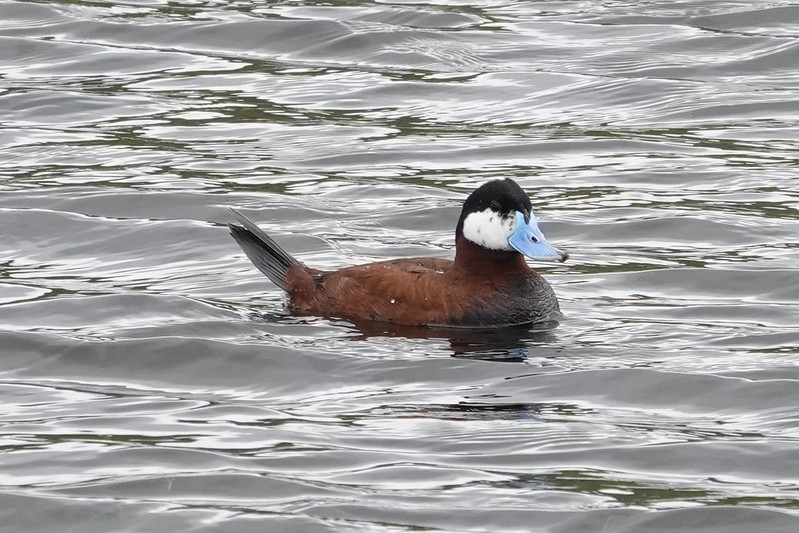
At the outset of the trail, a Belted Kingfisher bulleted across the lake surface before disappearing; a lone Ruddy Duck bobbed in the center of the lake, and Red-necked Grebe popped up right in front of the shoreline, affording us lovely views of its namesake plumage. Further on, we added several duck species to the list (Mallard, Gadwall, Green-winged Teal, and American Coot); Tree Swallow, Violet-green Swallow, and Barn Swallow swooped overhead and skimmed the lake for insects; a pair of Chipping Sparrow—with gorgeous rusty-red caps and creamy unmarked breasts—foraged about a fir tree; and nearby, an Orange-crowned Warbler attracted our attention with its loud, descending trill but we never saw it. At one point, Spotted Sandpiper were fairly numerous along the narrow lake margins but one surprised our group by perching on a branch sticking up from the ground. (It’s not every day one sees a shorebird perched on a branch.)
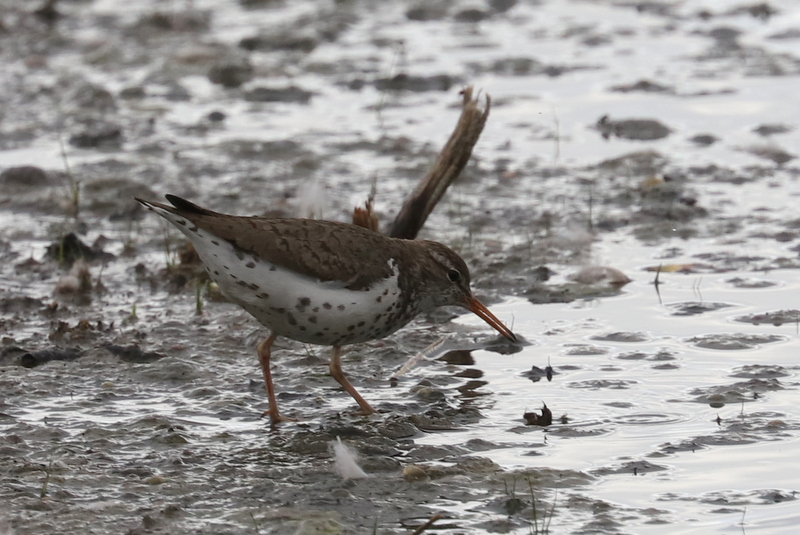
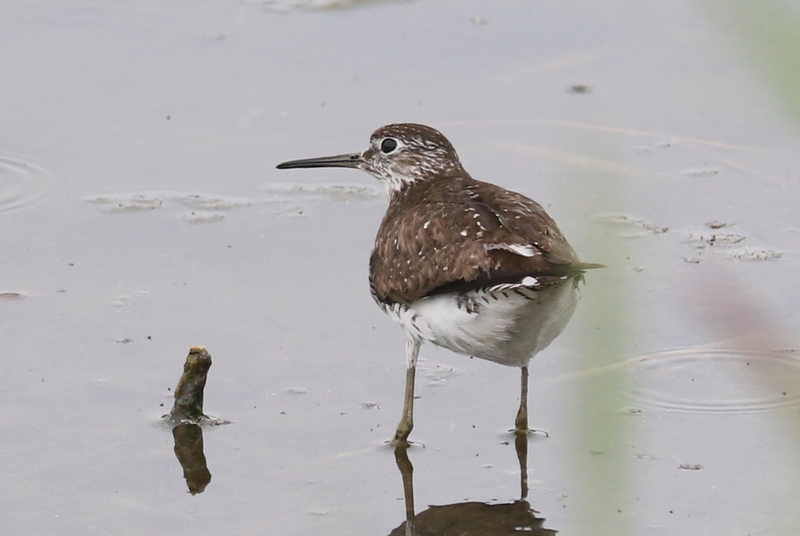
As our group enjoyed a particularly fruitful section of the river, a lone sandpiper attracted our attention. While tempting to assume it was another Spotted, there was something different about it: its back was heavily spotted and it sported a bold white eye-ring. The bill was longer, slimmer and dull, not orange. Triumph! A Solitary Sandpiper living up to its name! (An endearing quirk of the Solitary Sandpiper that sets it apart from the similar-looking Spotted Sandpiper is its tendency to “hiccup”—bob its head and shoulders—while the Spotted Sandpiper bobs its tail.)
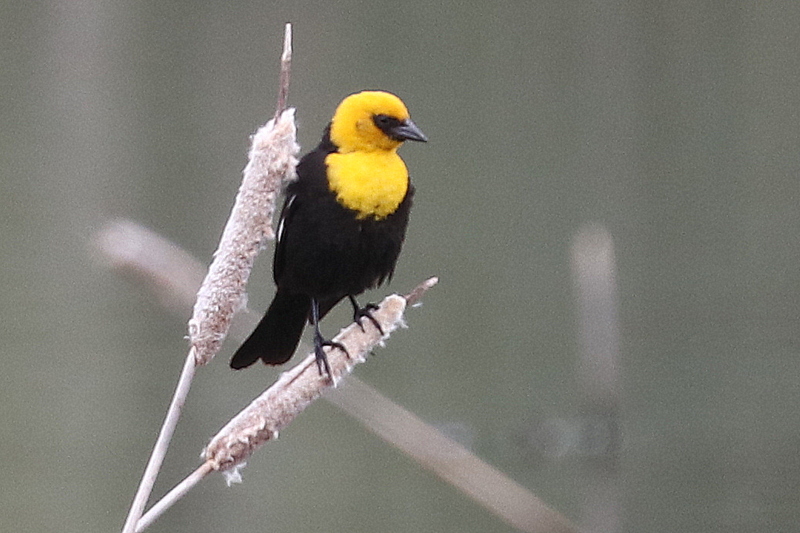
As we continued our way around the river, the rain sank its teeth into us. Still, we added Dark-eyed Junco, Song Sparrow, and Yellow-headed Blackbird to the list. The final bird of the outing, which only a few of us heard as we gratefully neared the car park, was a Lincoln’s Sparrow. Afterwards, we return to our accommodations to dry off and dress for dinner at the Red Rock Grill in 100 Mile House, one of the Cariboo’s three “major” towns, and the hub for our explorations into this glorious region.
Elliot Lake
After dinner—a feat of extraordinary coordination on our server’s and the restaurant’s part, considering there were 27 of us to feed—we stopped off at Elliot Lake on the way back to the resort for a little sunset birding.
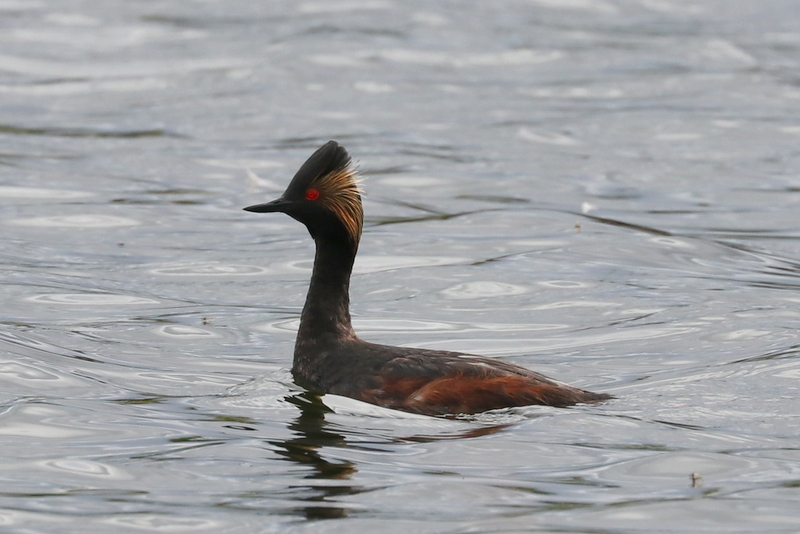
The lake was teeming with waterfowl and their recently hatched chicks. We added Northern Shoveler, Bufflehead, Common Goldeneye, Cinnamon Teal, and Redhead to the master trip list. A female Bufflehead paddled around with her brood of nine babies: tiny cotton balls with striking black caps and white cheeks. American Coot were also flush with gorgeous fluffy chicks with striking candy-red bills, eliciting all kinds of “coos” and gooey sentiments from (mostly) the ladies in our group. Blue-winged Teal hung out in pairs and Eared Grebe dove constantly, hunting the water column for algae and other morsels.

The reeds and overhead power lines were bustling with noisy Yellow-headed Blackbird and, if you searched among them, Red-winged Blackbird too. A Common Yellowthroat called from deep in the reeds but refused to show itself.
Earlier in the day, upon arrival at 100 Mile House, our car of four people stopped here at Elliot Lake, but on the other side of the road. We saw several Killdeer with chicks, as well as Bald Eagle, Northern Flicker, Common Raven, American Robin, Brewer’s Blackbird, and Savannah Sparrow, the latter two of which were calling. We concluded the day with a total of 38 bird species for both locations, Sepa and Elliot Lake, a decent score considering the brief nature of our outings and the rain.
eBird checklist Elliot Lake
Monday, June 24 – 100 Mile/108 Mile Ranch with Paul Foth
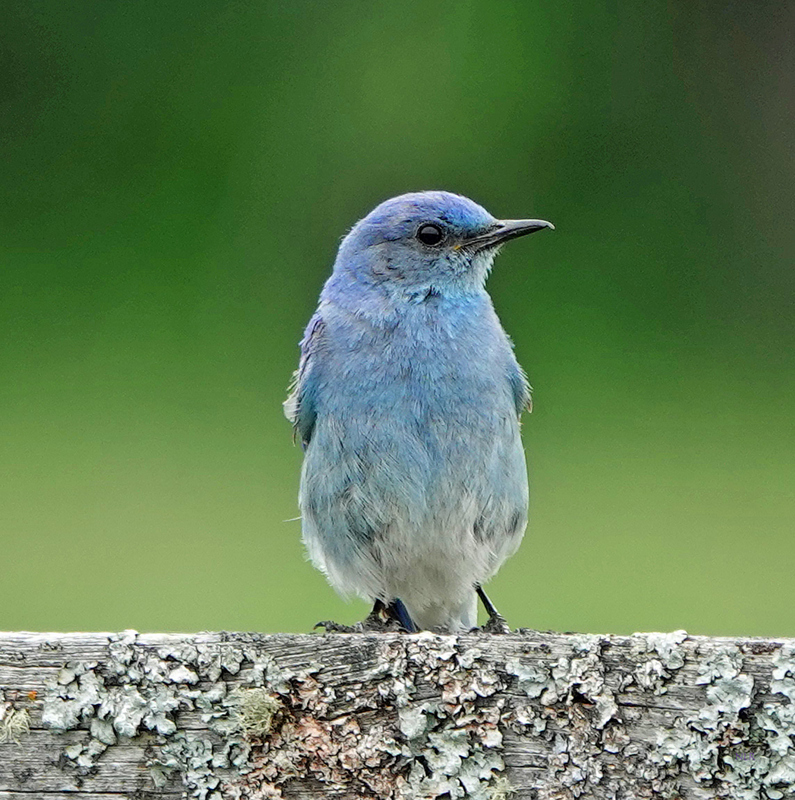
We awoke to the dawn chorus of Dark-eyed Junco, American Robin, and Mountain Chickadee. The resort rooms might not be five-star accommodation but their views over rolling lawns, lakes, and two breeding pairs (that we counted) of Mountain Bluebird certainly are. These resplendent cerulean birds flitted restlessly from treetop to fence post, and from fence post to tree top. Later risers were Violet-green Swallow, which seem to be nesting beneath the eaves of the resort.
With our party risen and caffeinated, we met Paul Foth, our guide for the day, who would show us around some of the area’s birding hotspots, starting with Walker Valley and Watson Lake, a short 5-minute drive from 108 Resort.
Walker Valley & Watson Lake
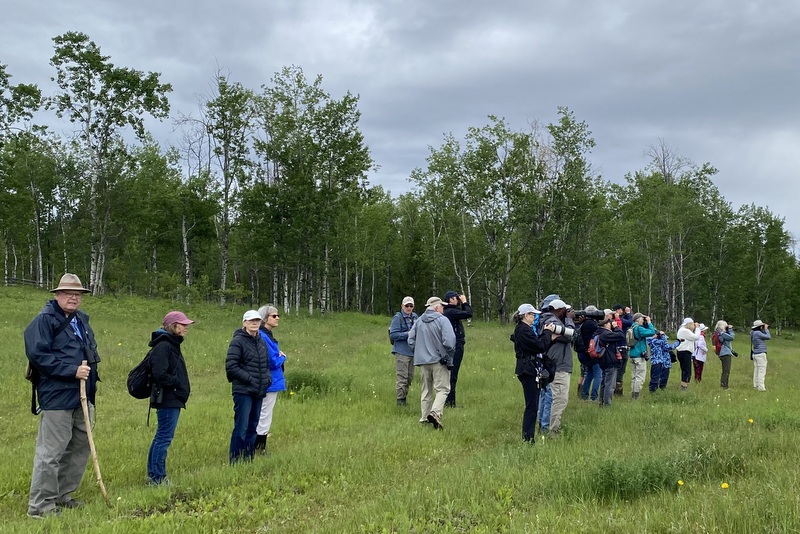

Walker Valley is a part of the 108 Community 1500 acres (green belt) consisting of rolling grasslands, marshes, and riverine habitat adjacent to Watson Creek, which empties out into the neighboring Watson Lake. No sooner had we pulled into the carpark than we began feverishly recording birds. A pair of Mountain Bluebirds perched on a nearby tree, Tree Swallows dived and swooped in and out of nest boxes, and Common Yellowthroat “witchity-witchity” warbled from the thick grassy marshes.
Paul has a formidable ken of the area’s birdlife, and a power of hearing that would have made a bat-eared fox jealous, often picking up on the far-off cheeps and cries of birds that would otherwise not have made our list. Western Wood-pewee, Least Flycatcher, Dusky Flycatcher, Lincoln’s Sparrow, and Evening Grosbeak, a small flock of which flew overhead peeping, were all courtesy of his keen hearing.
Side note: Upon being pointed out by Paul, all of these birds were clearly heard by multiple people in our party, thereby meeting the criteria for addition to the list. However, in the case of a few, like Least Flycatcher, which yours truly has never seen before, the decision was made to leave it off my eBird list, since it would then show up as a life bird.
As we trekked along the flank of Watson Creek, which expanded into a fairly wide waterway, Sora became particularly vociferous and, at one section where the reeds opened to reveal a few puddles of water, one was seen foraging out in the open. On the lake were numerous Northern Shoveler, Lesser Scaup, Ruddy Duck, American Wigeon, and Gadwall, with lesser numbers of Eared Grebe and the three teal species: Cinnamon, Blue-winged, and Green-winged Teal. As with Elliot Lake, Bufflehead were present with enormous broods of chicks (we counted 15 with one mother). Alas, we struck out on the hoped-for Wilson’s Phalarope.
The grasslands and wooded sections of the valley were no less active with birds. In one particularly fruitful spot, a Calliope Hummingbird popped out of the bushes and entertained us for a few precious seconds, its “fingered” iridescent gorget setting it apart from the more often seen Anna’s Hummingbird. An Eastern Kingbird alighted here too, treating us to excellent views before moving on, while a busy (and noisy) Yellow Warbler also made a show-stopping appearance. Later on, as we retraced our steps back to the car, this same section of the creek yielded a pair of Red-naped Sapsucker.
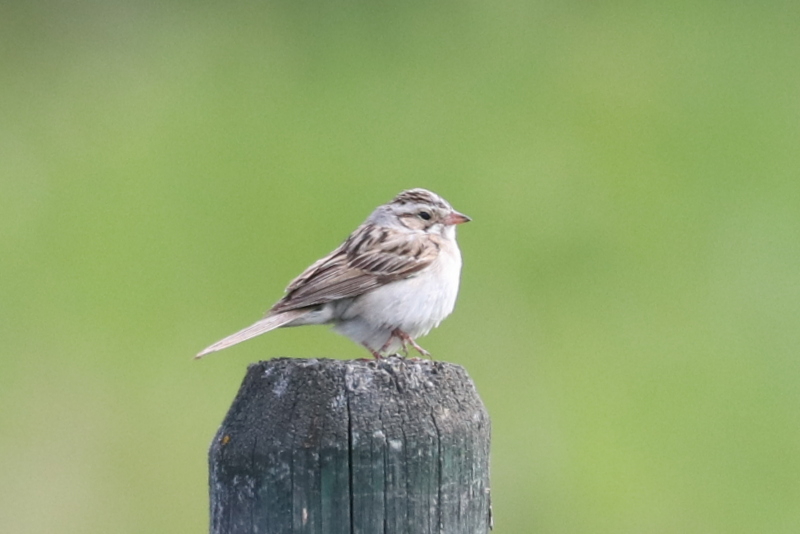
Further on, as we approached pastureland, we heard Willow Flycatcher, set against the ever-present backing track of noisy Red-winged and Yellow-headed Blackbird. But then, Paul teased out the call of what became the “bird of the outing” for many: Clay-coloured Sparrow! And to our greatest delight, this grassland sparrow decided to perch on a wooden fence, creamy chest puffed out, and bask in the morning sunlight, affording us a long, leisurely view of this lifer for many and a once-in-a-decade bird for others. (As it turns out, Clay-coloured Sparrow are far from rare in this part of BC and we would see them many more times on our trip.)
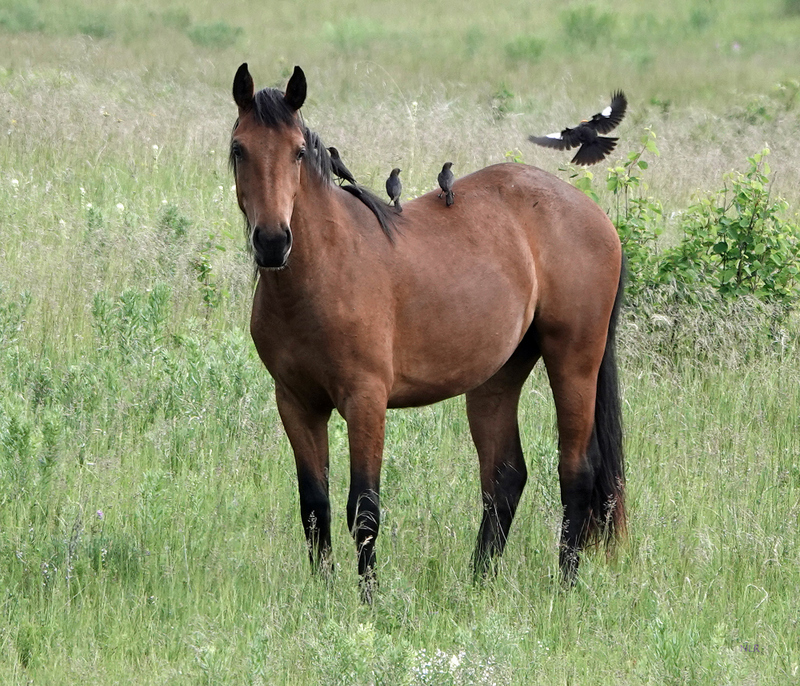
At the turnaround point, a small herd of horses regarded our party with curiosity, a flock of Brown-headed Cowbird on their backs. A pair of Pine Siskins flew overhead, and Western Meadowlark sang their sweet, rich jumbled songs, juxtaposed by the harsh twittering of Marsh Wren. Finally, on the way out of Walker Valley, we added American Kestrel to the list, a lovely complement to the Merlin we had seen on the way into the valley earlier that morning.
We concluded our outing with a brief survey of Watson Lake, which sported, in addition to the other waterfowl we had already seen on the creek, a Common Loon and a female Canvasback.
108 Mile Heritage Site
After a productive morning at Walker Valley and Watson Lake, we made a brief stop at 108 Mile Heritage site, where a nesting colony of Barn and Cliff Swallow have set up shop. The Barn Swallow were numerous, but you really had to scrutinize each bird to find the Cliff Swallow, which sported a rust-colored rump, a squared-off (and not deeply-forked) tail, and a kiss of cream on the forehead.
We watched Brewer’s Blackbird perform impressive acrobatics as they fly-catched from large fallen branches along the lake banks. A male Belted Kingfisher performed a flyby and a bedraggled Red-tailed Hawk (in molt) soared overhead. We also saw our first Yellow-rumped Warbler (Audubon’s) of the trip.
eBird checklist 108 Heritage Site
Tatton/Helena Lake Road Burn area/Scout Lake
After a picnic lunch at 100 Mile Marsh Wildlife Sanctuary, where we added Ring-necked Duck, Common Starling, and House Sparrow to our trip list, we drove up past the rubbish tip—which teemed with Common Raven, American Crow, and American Bald Eagle—to the burn area on Tatton/Helena Lake Road in the hopes of finding Black-backed Woodpecker. Unfortunately, the wind picked up, which obliterated any chance of us locating the woodpecker by sound. That said, Scout Lake and its adjacent woods, and charred stands of trees had a few treasures for us, including Northern Rough-winged Swallow and a new duck: Barrow’s Goldeneye.
A Merlin perched right out in the open, affording us great views; Turkey Vulture teetered overhead with their characteristic dihedral wing pattern; and we heard and saw Mountain Chickadee and Orange-crowned Warbler. A Red-breasted Nuthatch briefly alighted on a barren tree top branch before disappearing into the woods on the other side of the road. Ruby-crowned Kinglet and Western Tanager called in the distance but never revealed themselves. And all the while we birded the area, the comedic cacophony of crows and ravens squabbling over the nearby rubbish tip kept us mildly entertained.
Centennial Park
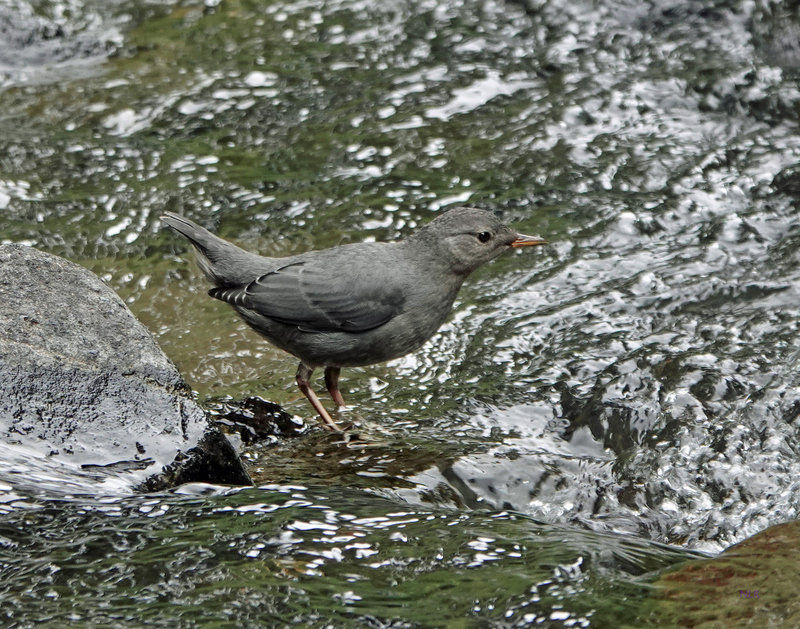
Our final stop for the day was Centennial Park, a lovely lush wooded park with a short trail to an impressive waterfall. The rain set in and so our time here was limited, but we did hear a variety of warblers, including Orange-crowned Warbler, Yellow-rumped Warbler, and Northern Waterthrush. The prize of this stop, however, was the American Dipper, which hunted the fast-flowing stream near the waterfall.
eBird checklist Centennial Park
Post script: at the end of the day, four Delta Naturalists sat on their resort room balcony, enjoying a glass of wine when we saw a flock of eight American White Pelican drifting in to land on Sepa Lake. Their bright white plumage and enormous size caught our attention, even at the distance from which we observed them.
Tuesday, June 25 – Mission Road & Williams Lake with Sue & Andy Gower
The day dawned over a heavy mist, which later burned off, giving us our first truly sunny day of the trip. At 8:00 AM, we met with our guides for the day: Sue and Andy Gower. Both were exceedingly warm and Sue’s enthusiasm, like a shot of caffeine, kicked us in the pants, revving us up for a day of birding along Mission Road.
Mission Road, 150 Mile House
Our birding began at the outset of Mission Road, a beautiful scenic route through the Williams Lake First Nation reserve, passing through farmlands, grasslands, several marshy areas, stands of trees, and ponds as well. With such a rich diversity of habitat comes a rich smorgasbord of birds to find!
High up on the hit list for the day was Long-billed Curlew to which Sue pointed towards a swath of grassland in the distance as a place that North America’s largest shorebirds had been seen in previous years. Upon scanning said section, our binoculars alighted upon a large bird with a long neck and bill hunting through the grass and we prematurely celebrated finding our quarry. Upon further scrutiny, however, the bird was determined to be a Sandhill Crane. As for how one could possibly confuse a Long-billed Curlew with a Sandhill Crane: well, the brain is a powerful story-telling and “wishful thinking” machine and this particular misadventure reminded us to be a little more sober in our determinations.
Above us, Red-tailed Hawk and Turkey Vulture rode the early morning thermals and around us, flycatchers of the genus Empidonax constantly challenged our identification skills. Thankfully, they were calling and we determined many of them to be Willow Flycatchers. Eastern Kingbird were also fairly common along this section of the road and a Western Kingbird made a brief appearance too.
Western Meadowlark and Savannah, Clay-colored, and Vesper Sparrow (a new one for the list) were singing loudly from the surrounding grasslands and fence posts. Mountain Bluebird were prolific, and yet we never tired of admiring their handsome cerulean plumage, which had an iridescent violet sheen in certain light. Another highlight for this first stop was our first Bullock’s Oriole for the trip, their bold orange plumage juxtaposing beautifully with the surrounding emerald habitat.
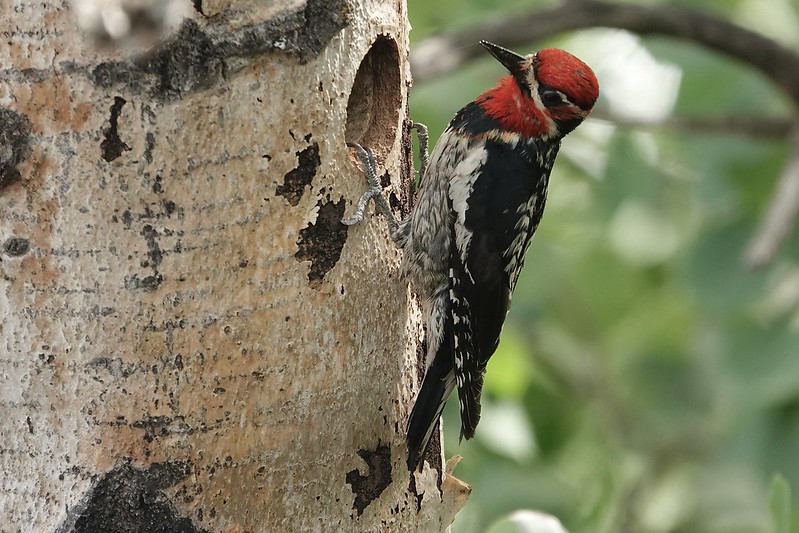
From here, we drove the length of Mission Road, stopping at half a dozen points of interest. A pond yielded Lesser Scaup, Mallard, and Western Flycatcher; a cattle farm had four large Black-billed Magpie milling about, as well as flocks of European Starling and Brewer’s Blackbird; and a cluster of residential housing seemed to please a family of Say’s Phoebe. Chipping Sparrow flitted in the grass, and Western Wood-Pewee called in the distance. At one point we stopped at a heavily treed thicket in the hopes of finding Veery, which we didn’t, but were instead rewarded with an active Red-naped Sapsucker nest, located right above an active Tree Swallow nest. We stood nearby, cameras and binoculars poised, as both parents of both species came to and fro with meals of insects for their incessantly whining chicks. Cedar Waxwing and Warbling Vireo also liked this particular location and later on, on our way back from Williams Lake, we located a singing Lazuli Bunting here too.

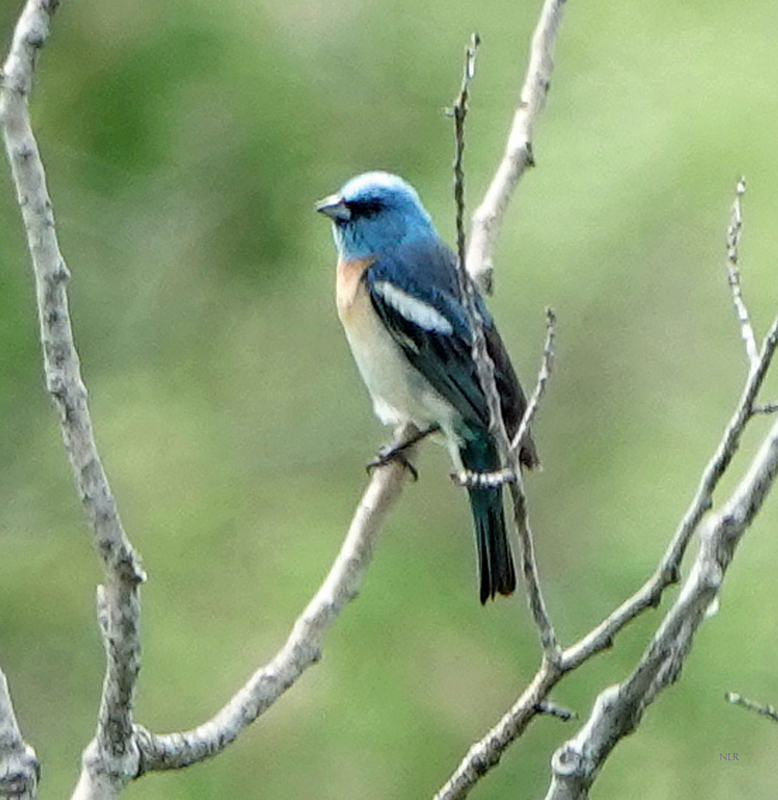
Some final highlights for mission road included Bobolink and a brief but definitive glimpse of a Townsend’s Solitaire, which we flushed from the side of the road while driving, its size, overall gray color, and bold white outer tail feathers leaving little doubt as to its ID.
Williams Lake – Scout Island Nature Centre
After several hours of birding in the increasing heat of the day, we made our way to Williams Lake for a much-needed lunch on the lush banks. The skies over the lake were quite productive for large birds like Bald Eagle and Osprey, and small flocks of American White Pelican slowly wafted in like enormous cruise ships. On land, a noisy Gray Catbird demonstrated where it got its name from, with its kitten-like mewling call. We also added Ring-billed Gull, Black-capped Chickadee, and Olive-sided Flycatcher to the list. We were hoping to find new warbler species, but Yellow Warbler seemed to predominate. Two Common Loon called to each other, lending a haunting backing track to the serene lake setting.

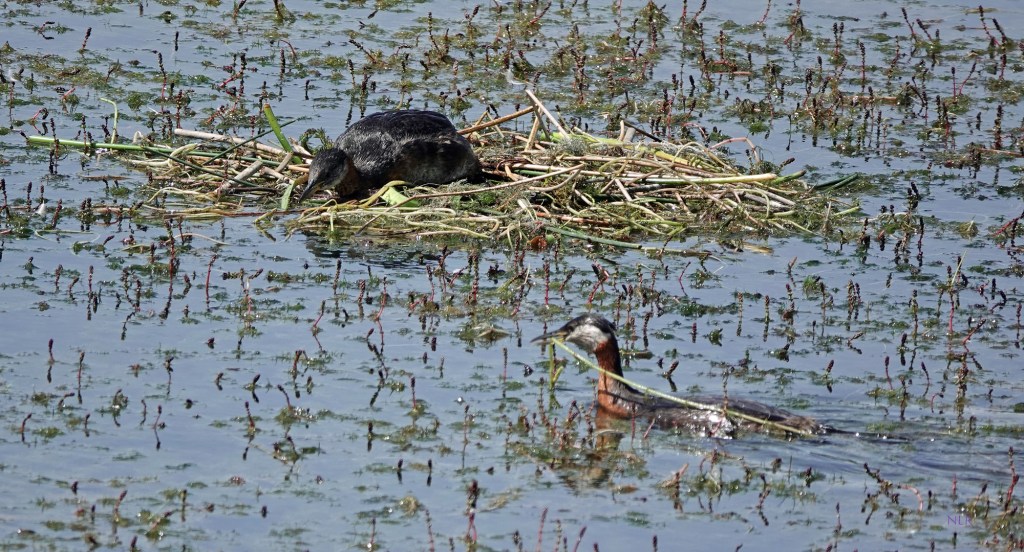
On our way out, we stopped to admire a nesting pair of Red-necked Grebe and a Cinnamon Teal indulging in a thorough bath. The final new bird for the day: a single Feral (Rock) Pigeon hanging out on a power line. Hey, they count for the list!
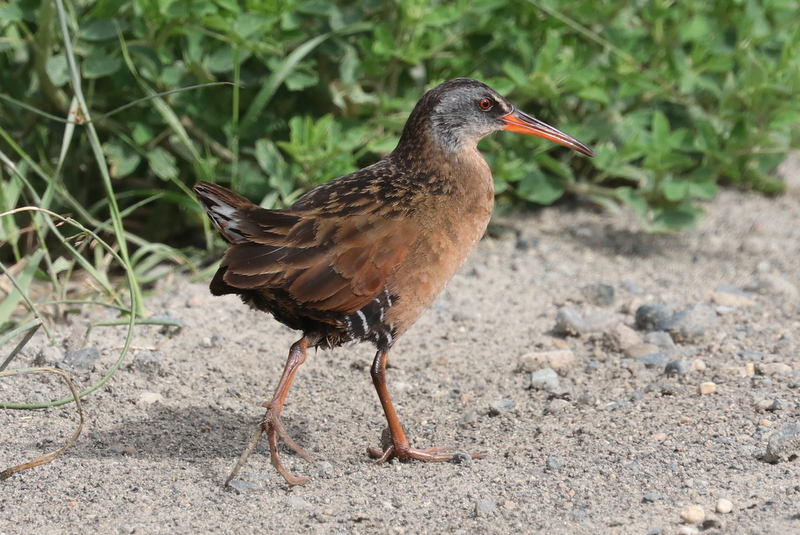
In the evening, a few members of our party stopped at Elliot Lake on the way back from dinner and while no new birds were seen, a Virginia Rail made a very unusual bold appearance by emerging completely from the reeds and making its way along the road in plain sight! We look forward to seeing the pictures.
Wednesday, June 26 – Horse & Graham Lake with Sue & Andy Gower
With the threat of rain looming later in the day, we embarked upon the day’s itinerary understanding that there was pressure to move a little more swiftly than usual. This time, we drove south towards Horse Lake and then due east along its shores to get to the furthest end. Here, thickets of trees, shrubs, and reeds provided an assortment of habitat for a fantastic diversity of songbirds!
Horse Lake East
As we turned into our destination road, a Sandhill Crane danced into sight across the road, which we startled into its rattling call. Some of our party saw it later join another adult and baby. An auspicious start to a morning birding with Sue and Andy Gower!
Getting out of our cars, we were met with a rush of birdsong, most notable of all was the teetering metallic tinkling of a Veery, a cinnamon-colored thrush with the most intriguing song. Lending their voices to this soundtrack were Song Sparrow, Yellow Warbler, American Redstart, and Northern Waterthrush. Once again, the latter bird—a lifer for yours truly—refused to show itself. On the other hand, a young male American Redstart with flashing orange and black plumage, while secretive and restless, was successfully tracked down, albeit briefly and by very few eyes.
Teased tremendously by birdsong, we made our way along the road, which wound around the lake, rising in elevation. This led us up and out of the thick tangle of bushes and marshland embracing the lake, offering us a much better vantage point over the birdlife and we quickly spotted Veery, Willow Flycatcher, Cedar Waxwing, American Robin, and Brown-headed Cowbird. On Horse Lake were Common Loon (with a chick), a single male Wood Duck, and a nesting pair of Red-necked Grebe. The first Great Blue Heron of the trip was seen flying overhead.
The silhouette of something clinging to the tip of a tall snag caught our attention and while we hoped for a different flavor of woodpecker, it turned out to be (yet another) Red-naped Sapsucker. The final bird to make the list at Horse Lake was a highlight for many, Alder Flycatcher, and particularly for me since I’d never seen one before. The bird certainly made us work for it, though! Here’s the story (a personal account):
Upon hearing its tell-tale “free-beer!” call, I scoured the bushes for signs of an Empidonax flycatcher. I spotted one at about the appropriate distance away for the loudness of its calling but it flitted away. I needed to see the bird calling to know for sure that it was the bird I was after and so I stood watching the snag for a few minutes. Alas, it didn’t return and so, despondent, I gave up and started trudging back to the car. I was almost all the way back when it struck up singing again. It might have been my last chance this trip to add an Alder Flycatcher as a lifer, and so I jogged back along the road to the spot where I reckoned it was, and saw the shape of a flycatcher in a bush. I trained my binoculars on the bird just in time to see it throw back its head and cry “free-beer!”
Success!
eBird checklist Horse Lake East
After a fruitful hour of birding at the eastern corner of Horse Lake, we struck out for Graham Lakes with a pit stop at a quiet camping ground on the way. Here, a lone Lincoln’s Sparrow sang its heart out and even posed for a few photos. Then, while Sue was briefing us on Graham Lakes, two Merlin started earnestly calling, and one exploded out of the low forest, alighted on a tree, and proceeded to defeather its lunch.

Graham Lakes
At Graham Lakes, we hiked up through forest, the gentle tinkling of Hermit Thrush in the cool air. Also heard were Yellow-rumped Warbler, Warbling Vireo, the sharp “pips!” of a Downy Woodpecker (later seen), and the hysterical yapping of a Pileated Woodpecker.
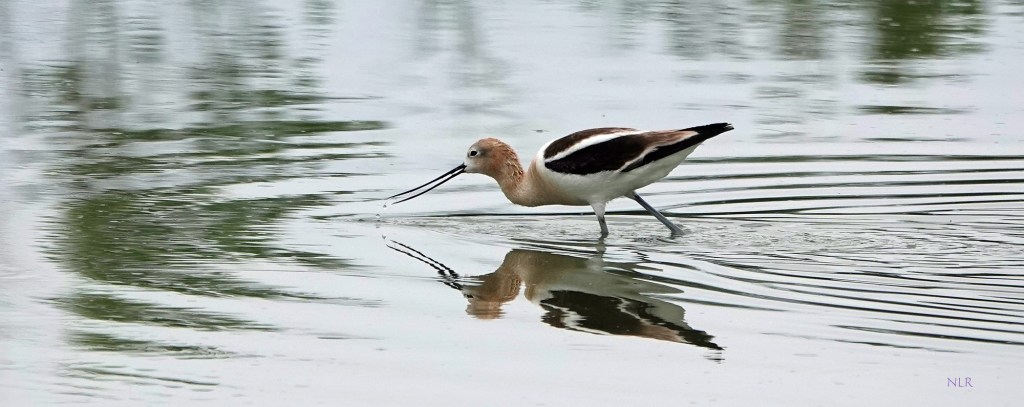
The trail terminated in a series of mineral-rich lakes, where close to 10 (counted) breeding American Avocets fiercely guarded their territories. Here, we spent a lovely hour or so watching the avocets chase any other shorebird who came remotely close to their territory, including Spotted Sandpiper of which there were at least a dozen, and Killdeer. Several of us continued along the lake and, at one point, watched a Killdeer put on the “broken wing” performance of its lifetime, flaring out its tail feathers to show its rust-colored rump in an effort to distract us from its nest or its young, which we never saw.
Our final stop for the day—just as a thunderstorm set in—was Sue and Andy Gower’s stunning lakehouse on Sulphurous Lake. Their feeders teemed with Pine Siskin and Dark-eyed Junco. A beautiful male Western Tanager dropped down to feed too and so did Purple Finch eventually. Chipping Sparrow and Red-breasted Nuthatch were much shier, but still posed for long enough for some to capture photos. Sadly, we did not see the Cassin’s Finch or Hairy Woodpecker Sue and Andy spoke of, but that only gives us an excuse to visit them again at some point in the future!

eBird checklist Sulphurous Lake
POSTSCRIPT BY TERRY CARR:
Thursday, June 27 – Watson & Elliot Lakes
Several participants headed for home or carried on to other destinations. Earlier Mike had seen a fox walking in front of his deck. Lidia had seen one on the golf course from her balcony on the first day. There have been several deer sightings here as well.
Thirteen of us braved the rain to walk along Watson and Elliot Lakes. These 2 small lakes have been the most productive for water birds and they did not disappoint. Coots with chicks were the most common. We added Canvasback chicks to our list of chicks, and three Wilson’s Snipe flew out of the reeds at Wilson Lake. At Elliot Lake we had close looks at Solitary and Spotted Sandpipers side by side – and more baby Killdeer.
eBird checklist Watson Lake
eBird checklist Elliot Lake
 Delta Naturalists Society