
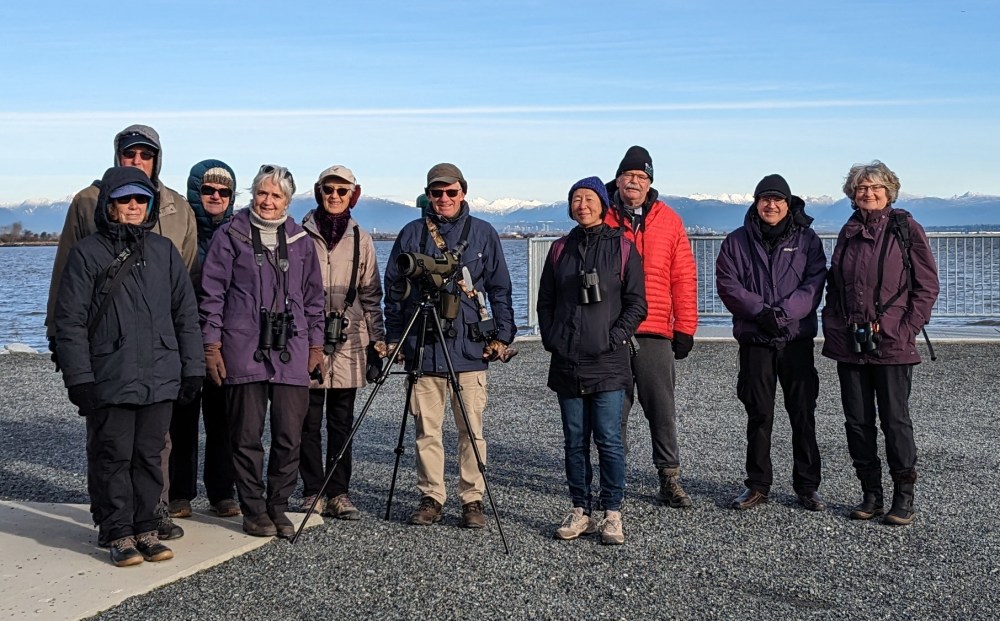
Our group this morning was a companionable twelve: Glen, Lidia, Lindy, Warren and Lynne, Richard, Colin and Stephanie, David and Noreen, myself, and Bryan who joined us on the trail. We met at 9am at Boundary Bay regional park, a comparatively late start for our walk, but appropriate to the cool winter conditions.
A group of Brewer’s Blackbirds followed us from the carpark to the pond and beach area. The pond had Mallard, American Wigeon and a female Common Goldeneye. The ocean at this end of the beach was quiet, although David managed to scope some distant Surf Scoter and a few White-winged Scoters. These birds occur here in big flocks, but disperse out into the bay where they can be difficult to see if the water is choppy. Keen-eyed Colin spotted a Peregrine Falcon flying past.
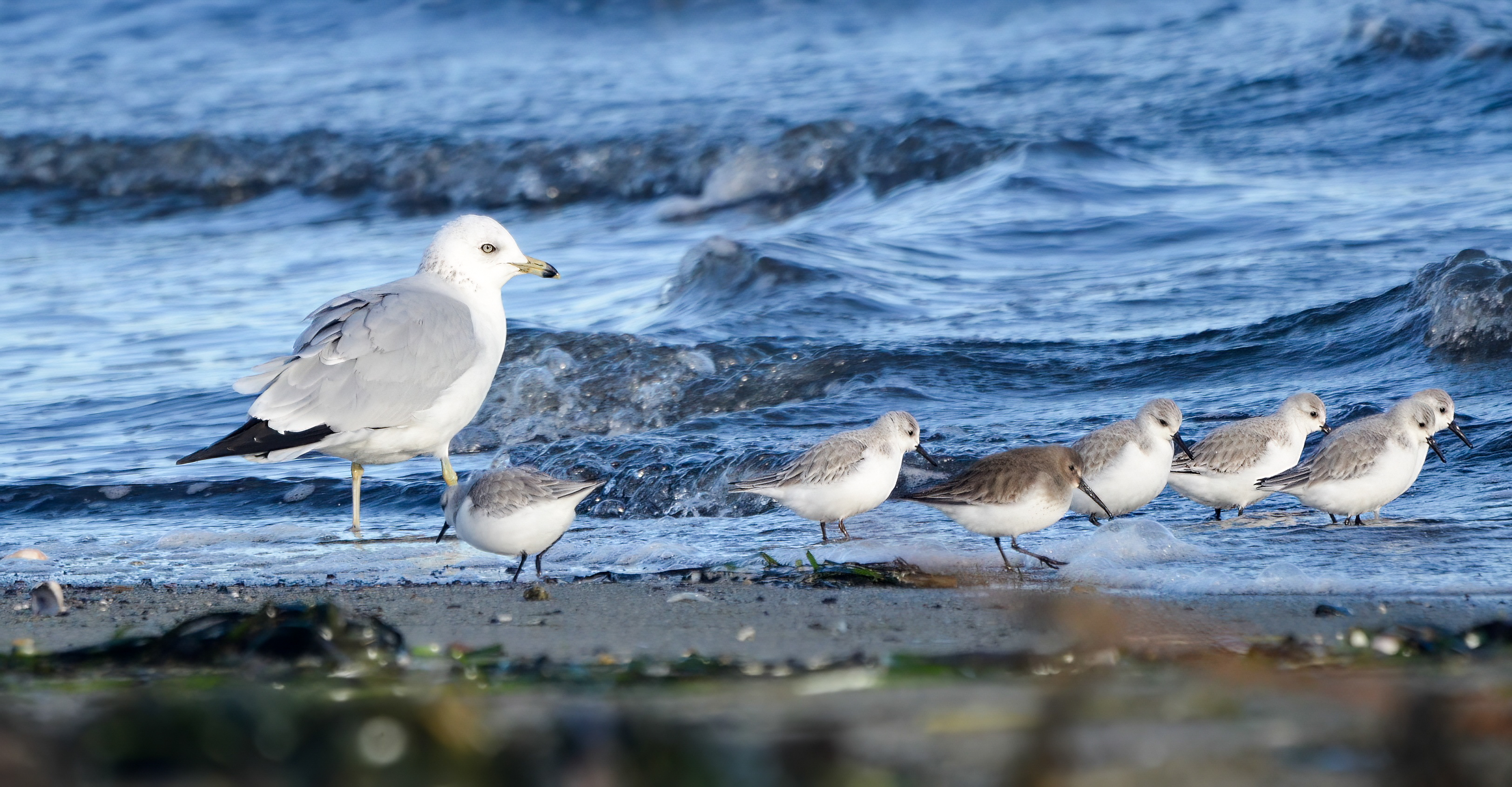
We walked along the beachside trail, marvelling at the total mess the recent snowstorms and high tides had made of the beach, trail and marsh. The park had to close for several days over the holidays as the trail had been washed and logs and branches were strewn everywhere. The boardwalk through the marsh was closed but the park staff had managed to roughly repair the main dyke trail. Walking north up the beach we encountered flocks of “peeps” (a nickname for some beautiful small shorebirds we have here in winter) – Sanderling and Dunlin. The flocks were not as large as sometimes, we estimated about 60 of each species. Most of the Dunlin, tens of thousands of which winter here, will have been elsewhere around the bay, but this beach is always a good one for Sanderling.
Our group continued north along the bayside trail without seeing a lot of other birds. There were a few Golden-crowned and White-crowned Sparrows under the hedges, a handful of Purple Finches in the small trees, and a few American Robins and Red-winged Blackbirds, plus occasional Bald Eagles flying purposefully across the water.
The lagoon area near the pumphouse was much more productive: this is where all the water birds had gathered. Using their scope, David and Noreen counted an amazing 10 Eurasian Wigeon with a group of American Wigeon. A large flock of Northern Pintail had gathered on and near the spit and rafts of Surf Scoter and Greater Scaup were swimming out in the deeper water. It was great to see a big flock of Brant at this traditional gathering spot for them: we estimate-counted 250 in and around the spit. (Casual birding tends to be a bit relaxed about precise numbers – we try and give estimates to the nearest 10 or 100 as a guide to the birds’ abundance.)
The next part of our walk (after a quick photo op by the pumphouse) took us through the grassland and trees of the park interior. Although it started rather quietly, this trail provided some great sightings. A flock of Bushtits foraging in the alders was followed by several Anna’s Hummingbirds buzzing around the blackberry bushes. Noreen pointed out the lovely little Townsend’s Solitaire that she and David had found yesterday; it was foraging happily on berries until a robin displaced it.

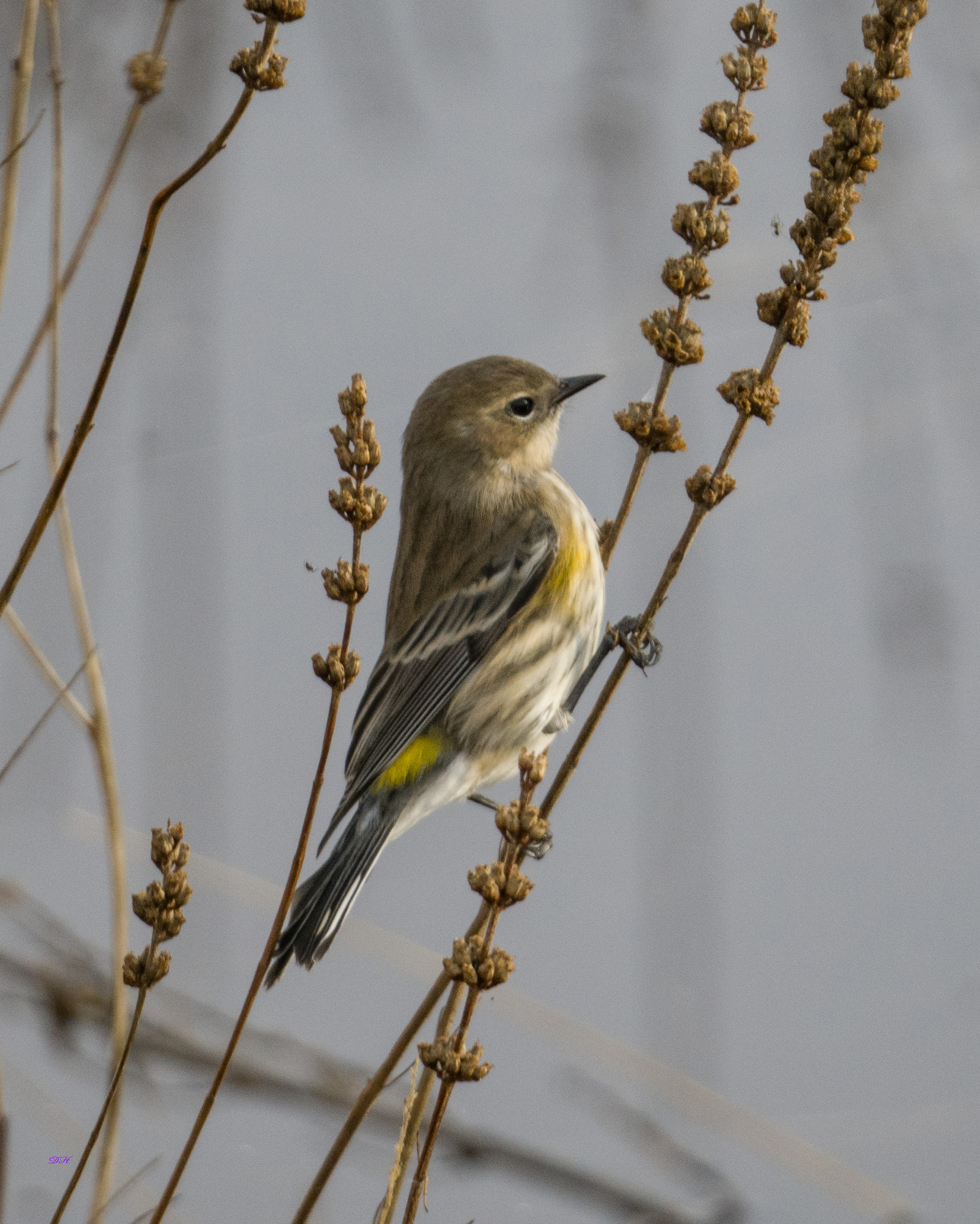
The next excitement was a single Yellow-rumped Warbler (Myrtle) feeding on purple loosestrife seeds in a flooded part of the grassland.
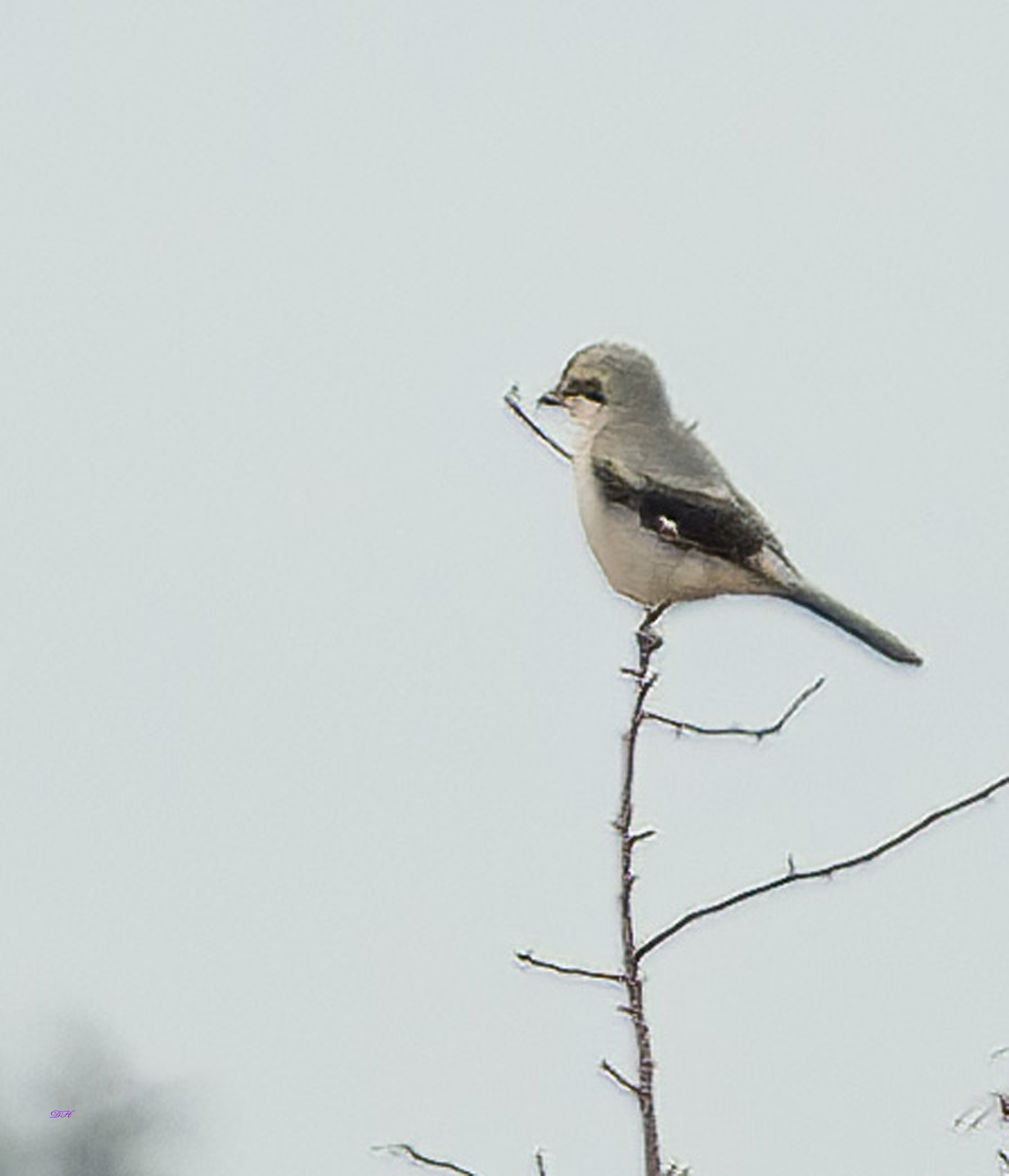
For the grand finale, a Northern Shrike appeared in the interior grassland/shrub area visible from the Bert Brink trail. I am not sure whether Colin or David spotted that one, but we all got great views. We picked up a couple of other common birds for the list here: Red-tailed Hawk, Northern Flicker (most unusual to only see one here) and our second or third Northern Harrier.
The total species count for our chilly 4km walk was a satisfying 41, with lots of regular winter species and several surprises. Thank you everyone for participating, as usual, the chat fest was as good as the birding!
Anne Murray
Photos are on flickr.
Anne’s eBird checklist
 Delta Naturalists Society
Leave a comment