
It may have been toe-numbingly cold, but with unthreatening high clouds and thin sunlight, 17 Delta Naturalists arrived at Point Roberts’ Lighthouse Marine Park grateful for the conditions. They were Thea (yours truly), Rosemary, Anne, Lidia, Jonathan, Lorraine, Nicki, Margaretha, Liz, Marion, Pat, Brian, Louise, Dave, Noreen, Lynne, and Warren.

The windless day left the surface of the water like a mirror, causing the four Common Loons and two Horned Grebes that were paddling close to shore to really stand out. A Harbour Seal surfaced repeatedly. We spent a good 20 minutes at the section of shoreline immediately in front of the parking lot, identifying the fast-flying sea birds that were whizzing past: Pelagic and Double-crested Cormorants; White-winged and Surf Scoters; and long streamers of Red-breasted Mergansers.
Two American Bald Eagles stood sentry nearby: one on the roof of a home and the other on one of the wooden pylons that thrust out of the water. This popular hang-out spot for seabirds also played host to a Western x Glaucous-winged Gull hybrid and a Belted Kingfisher, which we probably wouldn’t have spotted were it not for its drilling call. Anne spotted a Cooper’s Hawk circling the parking lot, disturbing a flock of European Starlings.

Further down the coast, as we made our way to the lighthouse, two exquisitely handsome male Harlequin Ducks (and two much-less ostentatiously dressed females) paddled in the shallows close to shore, affording photographers excellent shots. A lone female Bufflehead attempted to blend in with the Harlequins but she was betrayed by her obviously smaller size and missing white facial patch. Short-billed, Glaucous-winged, and Ring-billed Gulls flew by and overhead, really putting our gull knowledge to the test.
Right before the lighthouse, things started getting incredibly interesting. There must have been a shoal of fish out to sea because, in addition to Harbour Porpoises, a close-knit flock of gulls with snow-white underwings, black wing tips, and elegantly-tapered tails skittered over the surface of the water. Armed with our telescopes—and Anne’s oracle-like powers of bird knowledge—we were able to identify them as Bonaparte’s Gulls.
Anne then spotted a sizeable flock of Western Grebes (14 of them!) behind the gulls. I picked out a lone Common Murre mixed in with the other seabirds. (In non-breeding plumage, its black cap and accidental slash of badly applied eyeliner makes ID pretty easy.)

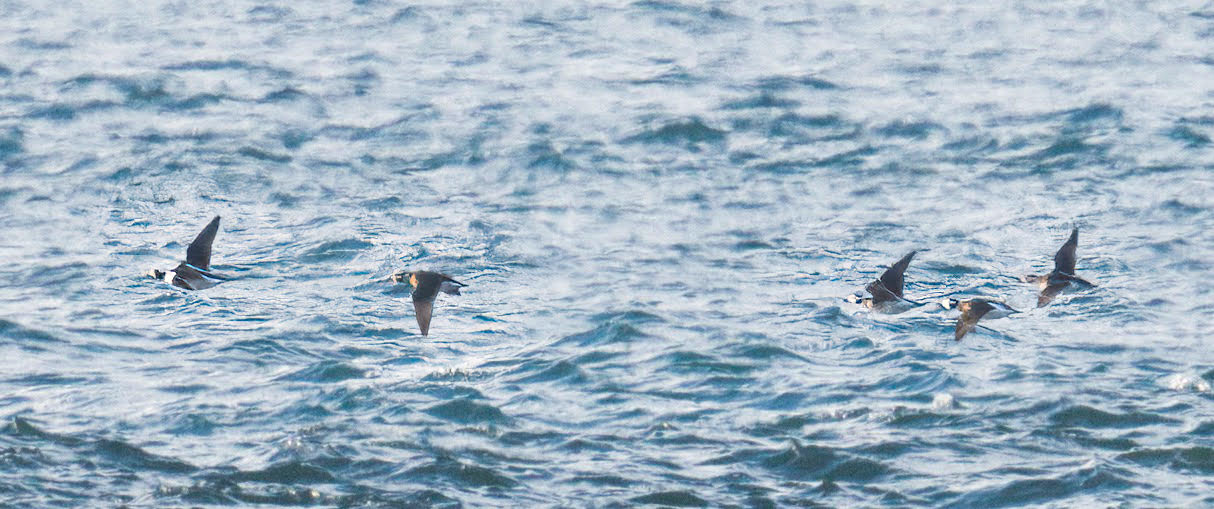
There was also a small contingent of Pigeon Guillemots in non-breeding plumage bobbing in the water and a flock of Snow Geese flew over. But most exciting of all was the flock of Long-tailed Ducks that flew by so quickly, only a few of us saw them. Luckily, Brian was able to snap a photo, which may never find its way into a National Geographic magazine but it being proof that I’m not losing my marbles makes it far more valuable to me.
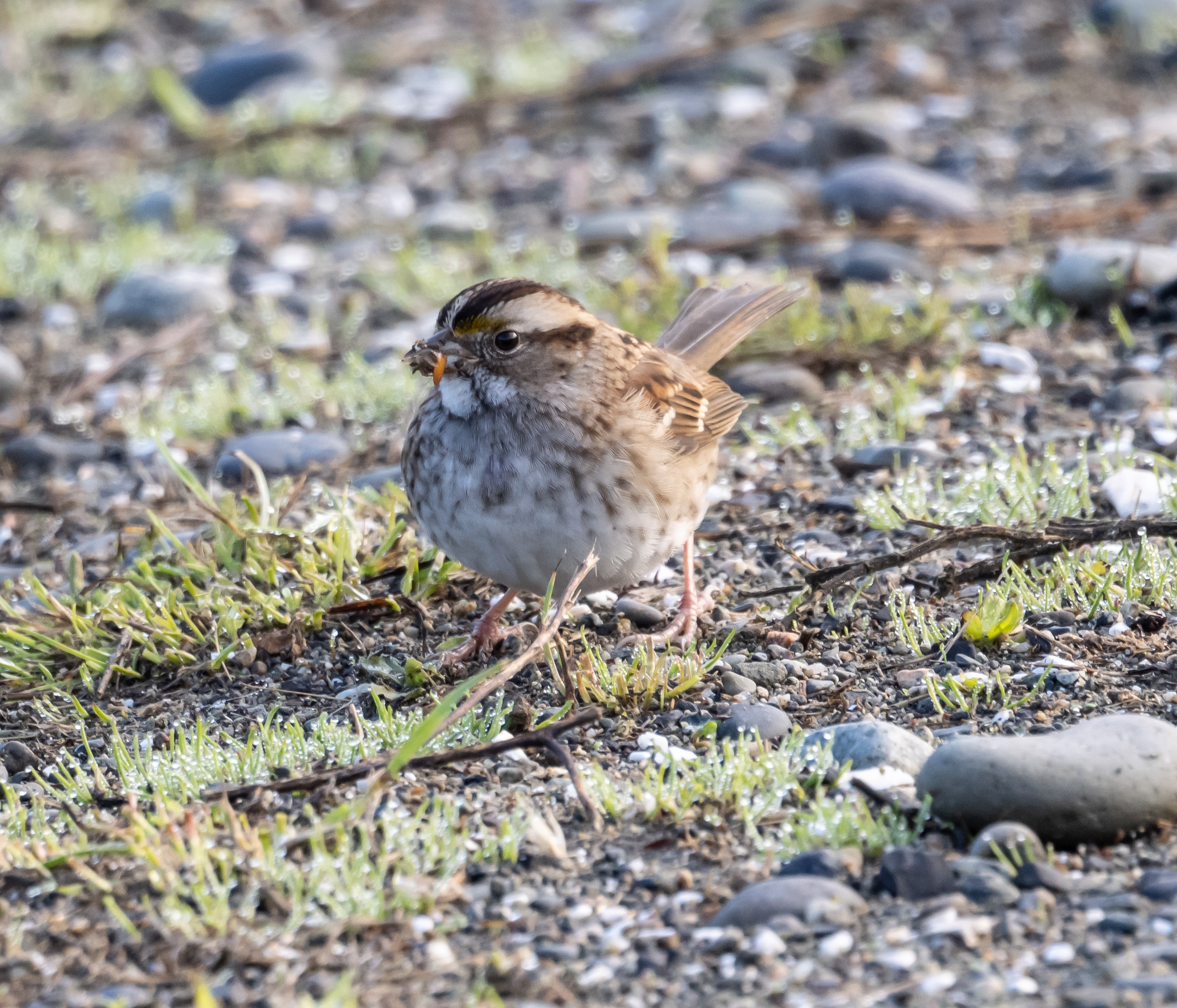
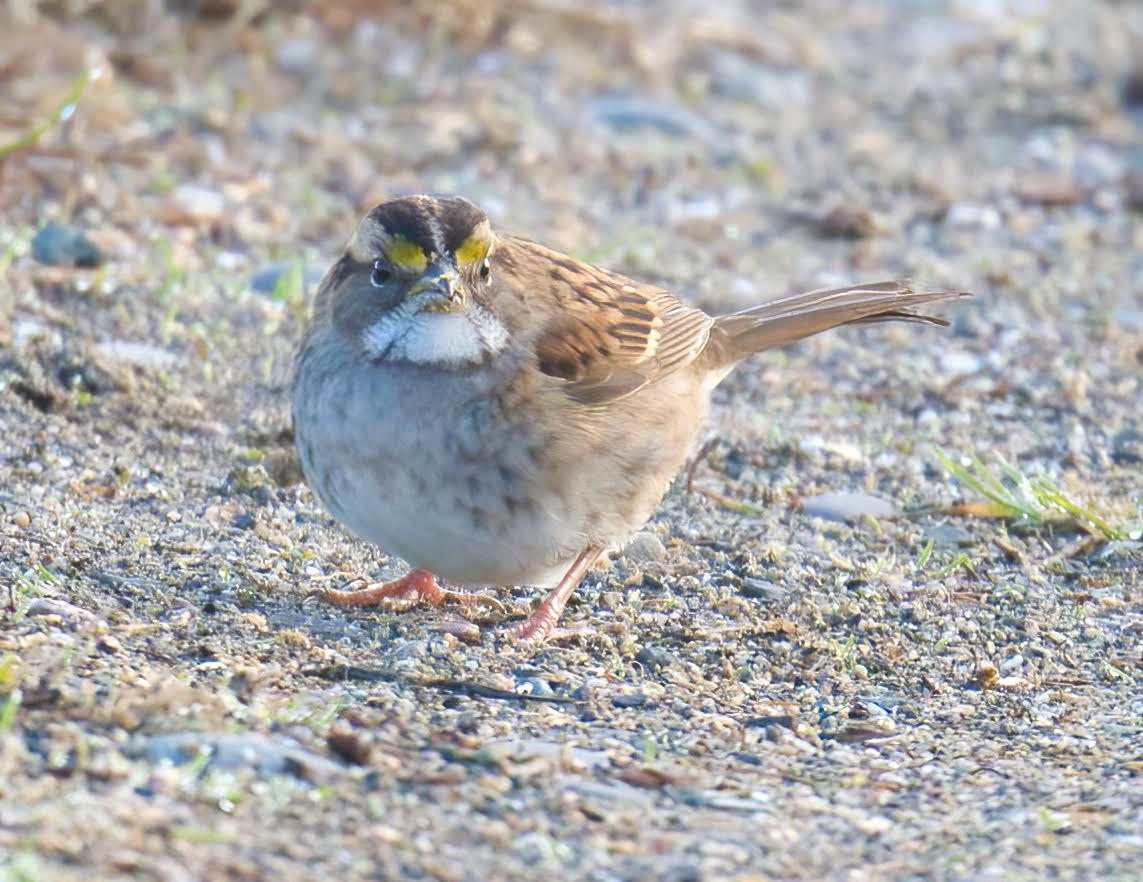
With the seaward side of the path yielding such a wondrous assortment of treasures, we kind of forgot to scan the bushes and field habitat on the landward side, which we only started doing well past the lighthouse. Once we did, however, the species list received a considerable boost. Black-capped Chickadees, Pacific Wrens, Song Sparrows, and a Fox Sparrow hunted the thickets, while Ruby-crowned Kinglets twitched about a pine tree. On the path ahead, Golden-crowned Sparrows, juvenile White-crowned Sparrows, and—drumroll please—White-throated Sparrows scuffed and pecked away in the gravel.
By the time we had wrapped up our lap of the park, we’d added Great Blue Heron, Golden-crowned Kinglets, and a few more passerines to our list, which came to a respectable 34
species.
Lighthouse Marine Park eBird checklist
The marina itself was very quiet: we only saw two Horned Grebes paddling between the boats. In any case, the biting cold chased us back to our cars before we were willing to give it much more of a chance.
Things improved somewhat at Point Roberts Jetties. Although not a single shorebird was to be seen (with the exception of two noisy Killdeers flying overhead), a good assortment of seabirds was seen scattered about the ocean, including Surf Scoters, Red-breasted Mergansers, Horned Grebes, and Common Loons. A mixed flock of Glaucous-winged Gulls and Short-billed Gulls chilled on the beach, and White-crowned Sparrows, Golden-crowned Sparrows, and Spotted Towhees could be heard calling from the embracing vegetation. A decent-sized flock of Harlequin Ducks were nestled into the cove.
The air traffic report was particularly exciting: a Red-tailed Hawk flew from its perch in a tree to land quite heavily in the dry grasses near the turn-off to the jetties. Four stately Trumpeter Swans flew overhead and had I not noticed their unusually deep, well, trumpeting honks, I would never have cast my eyes skywards and seen them!
Point Roberts Jetties eBird checklist
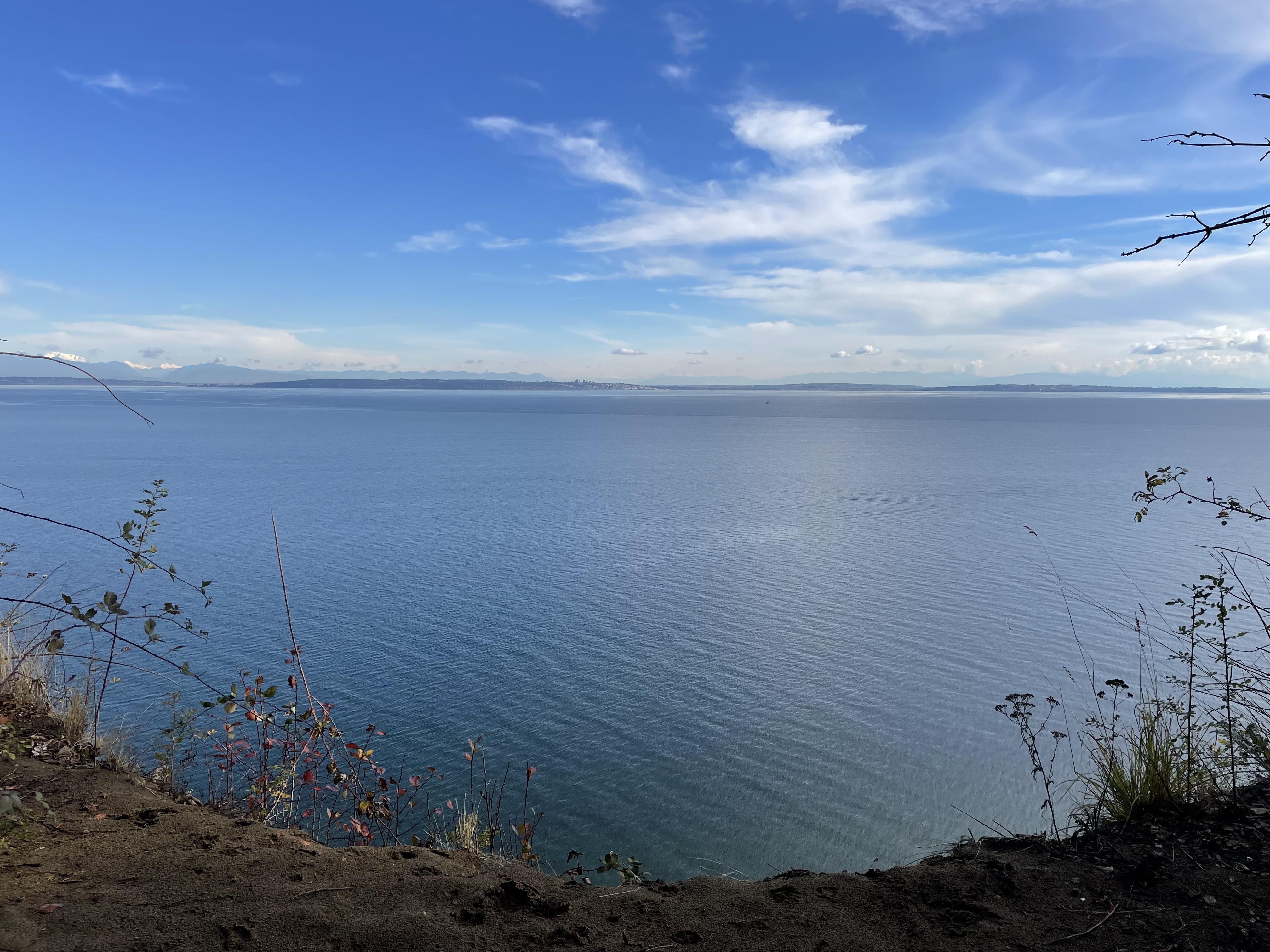
Our final stop for the day was Lily Point Marine Reserve, home to several breath-taking
viewpoints out over the Pacific Ocean. Half of the group came here while the others went to Seabright Farm, managing to track down the American Kestrel the Tuesday group saw.
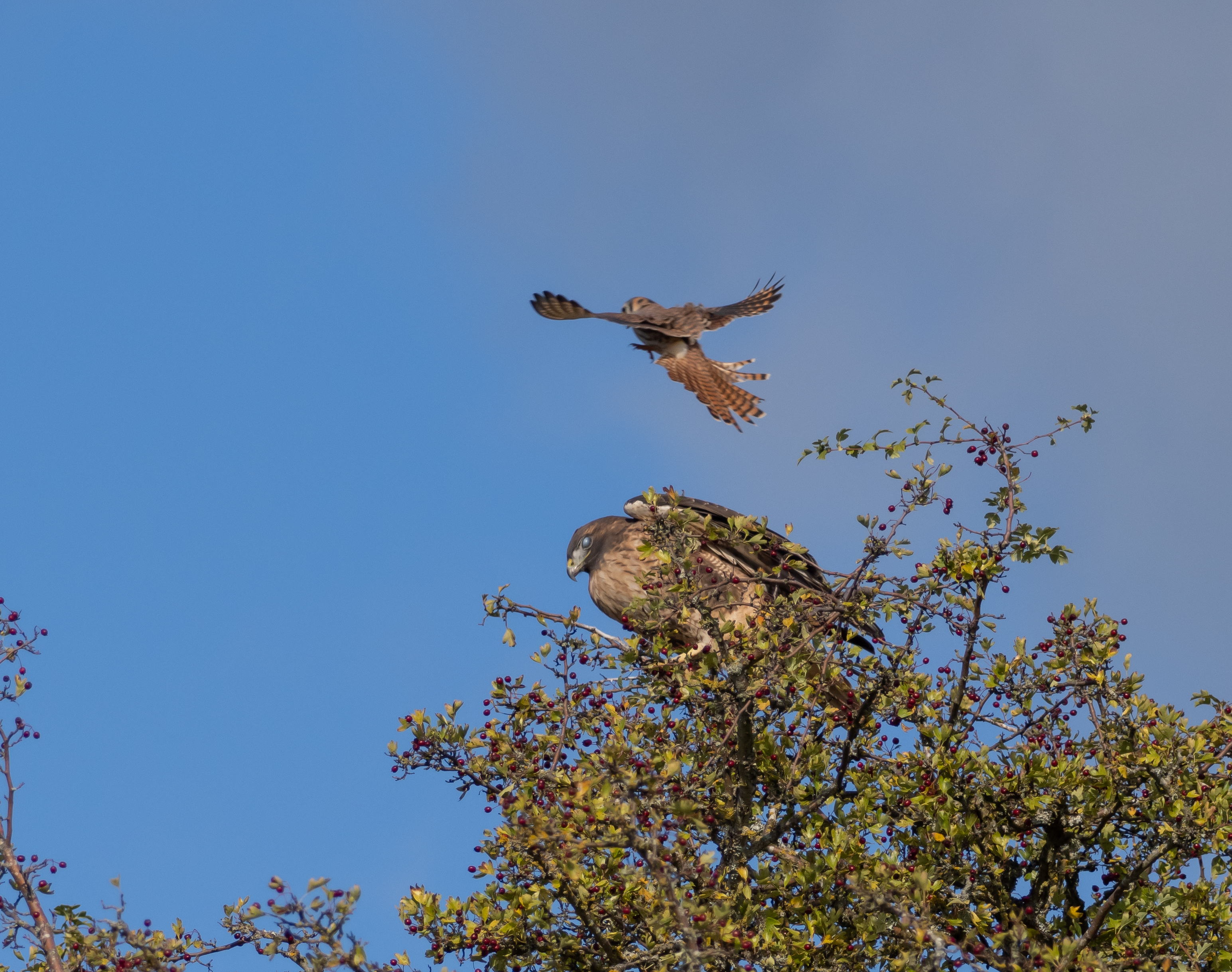
We didn’t add any new ocean birds to the list, but I did hear Red-breasted Nuthatches beeping away in the thick forest canopy overhead, as well as what we suspect to be a Douglas Squirrel (or perhaps a chipmunk) making a high, repetitive call, which I at first took to be some kind of small raptor until Merlin utterly refused to give me a Sound ID for it. We also found Glen’s Douglas Fir Cone mushrooms: remarkably beautiful and graceful-looking things (for a fungus).

It was a beautiful day—cold but refreshing and filled with great sightings—capped with the relief to drive home knowing that all border requirements had been dropped and that we could fill our tanks with gas for 50 cents less per litre!
Thea Beckman
More photos on flickr
 Delta Naturalists Society
Leave a comment