
On Wednesday, Sept 7, 14 DNS members ventured across the border to our turbulent southern neighbour, risking surprise COVID tests, grumpy border guards, and distended bladders to scour the Washington wilderness for birds. By the end of the day—after circumventing lakes, tramping through forests, and skirting precipitous mountain slopes—we had accumulated a record-breaking number of bird sightings.
TEN.
That’s right: ten species of birds—fewer than the number of people in our group—after an entire day of nature-viewing in the North Cascades. But, would you believe, it didn’t even matter because the scenery was so utterly spectacular that at any given point on our excursion, most of us were standing staring, slack-jawed, at the grand, sweeping vista of dramatic mountains and plunging valleys set against an impossibly azure sky. Plus, there was no shortage of garishly-dressed insects to keep Terry’s camera preoccupied. In fact, considering the absence of birdlife, even yours truly (who’s terribly bird-obsessed) was forced to learn a thing or two about butterflies and dragonflies.
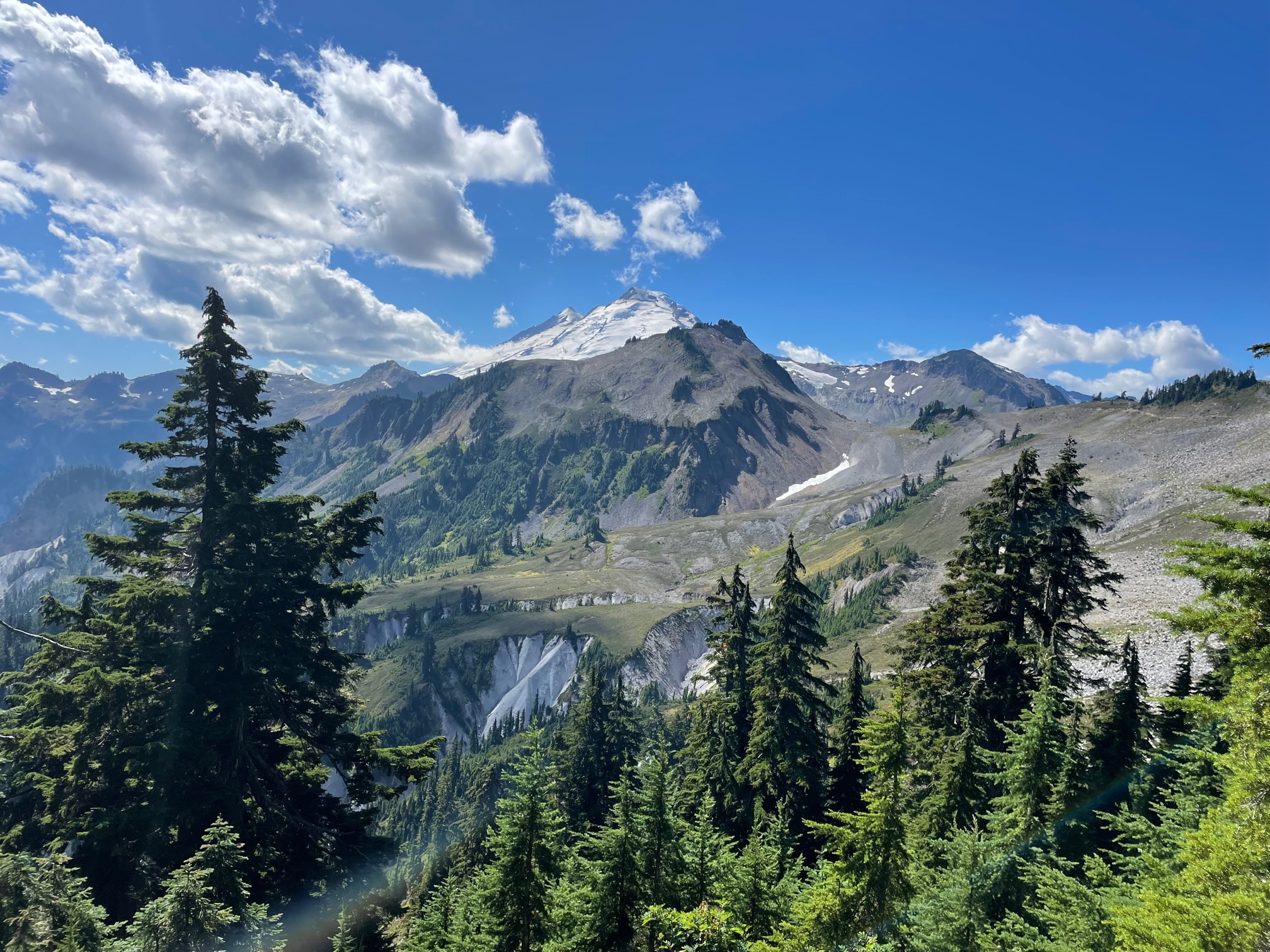

The day commenced at the Glacier Public Service Centre, where Terry, Thea, Nadine, Rosemary, Chris, Marlene, Stephanie, Colin, David, Noreen, Dottie, Bob, Lidia and Margaret met before negotiating a relentless number of switchbacks to climb into the altitudinous saddle between Mount Baker and Mount Shuksan.
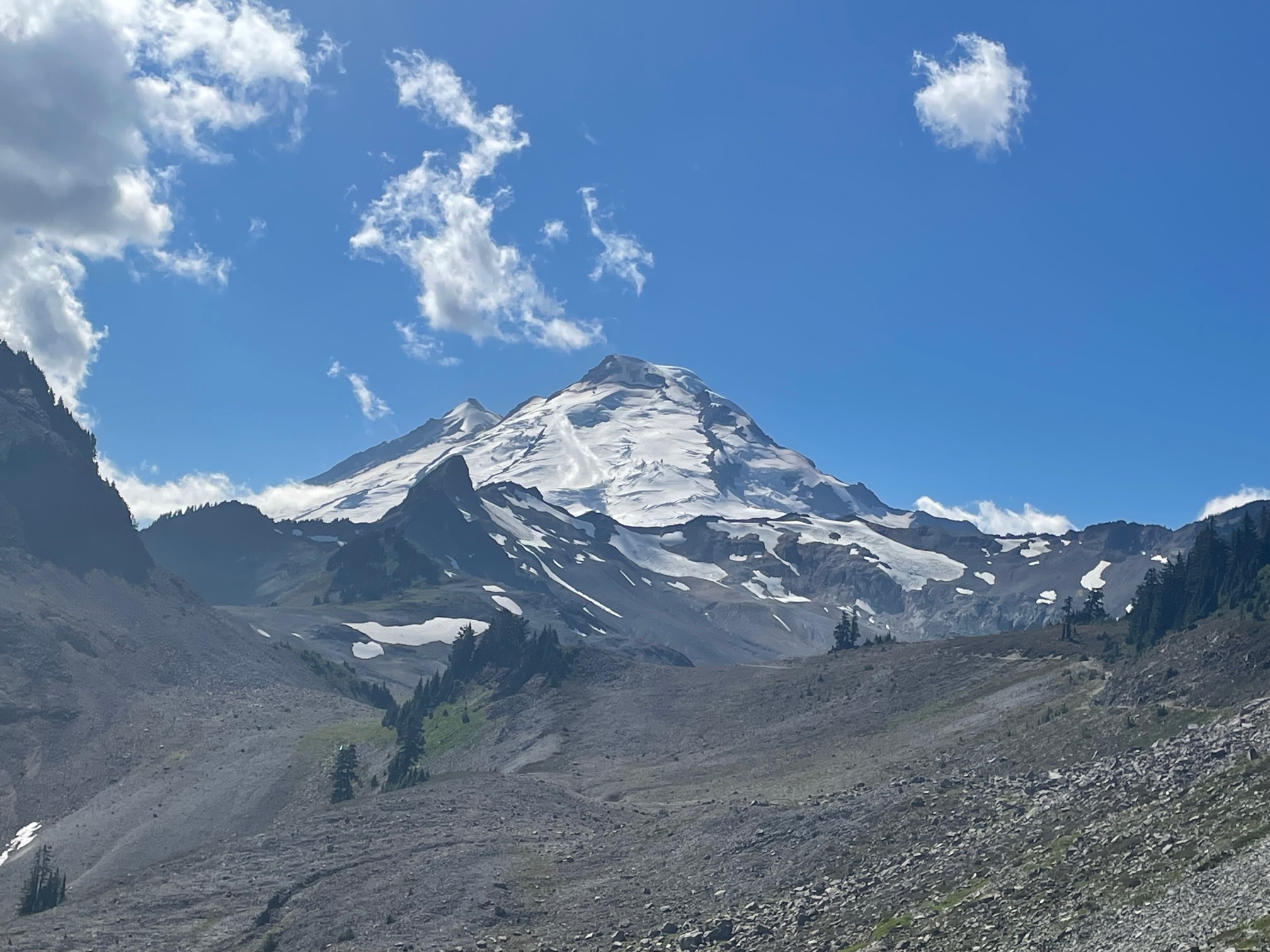
The former, a perpetual westerly landmark on the Vancouver horizon, is a 10,800-ft ACTIVE glacier-frosted stratovolcano in the North Cascades. In fact, Mount Baker is the second-most thermally active crater in the Cascade Range after Mount St. Helens. (Thankfully, it dozed peacefully during our visit.) Mount Shuksan is a glaciated massif (a compact group of mountains) located immediately to the east of Mount Baker, and derives its name from the Lummi word for “high peak”.
Our first official stop was Picture Lake, so named for its beautiful vantage point of Mount Shuksan and its tendency to reflect in exquisite detail the neighbouring mountain peaks.
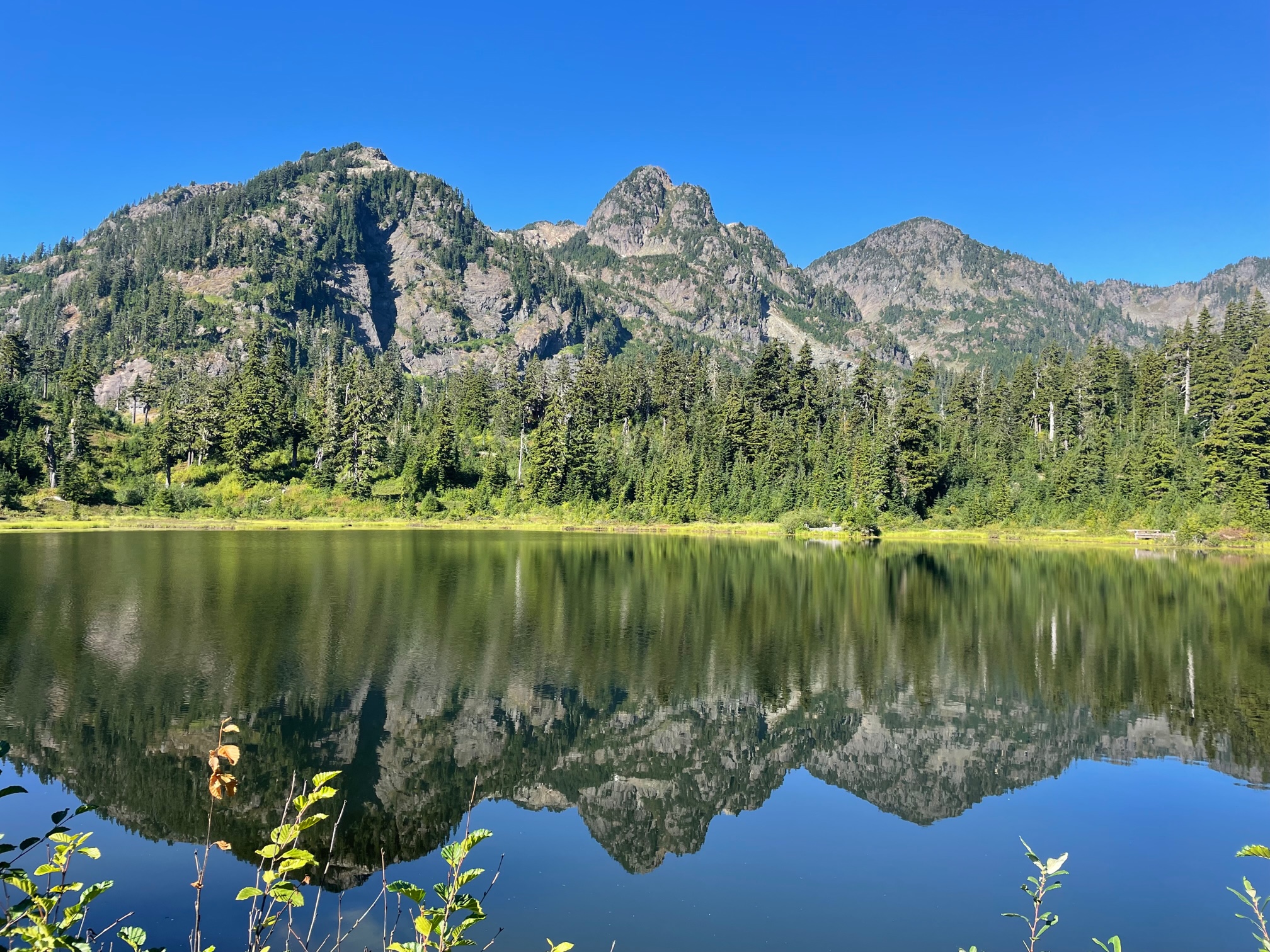
We took a leisurely tour around the lake, where we spotted a Chestnut-backed Chickadee, a few Dark-eyed Juncos, and a Cooper’s Hawk being harassed by unidentified swallows. We also heard (but didn’t see) Red-breasted Nuthatches and saw an American Robin high up in the dead branches of a tree. Blueberry bushes with ripe cargo offered us snacks en route and a cornucopia of gaily-colored arthropods—butterflies, dragonflies, damselflies and bumble bees—provided entertainment.

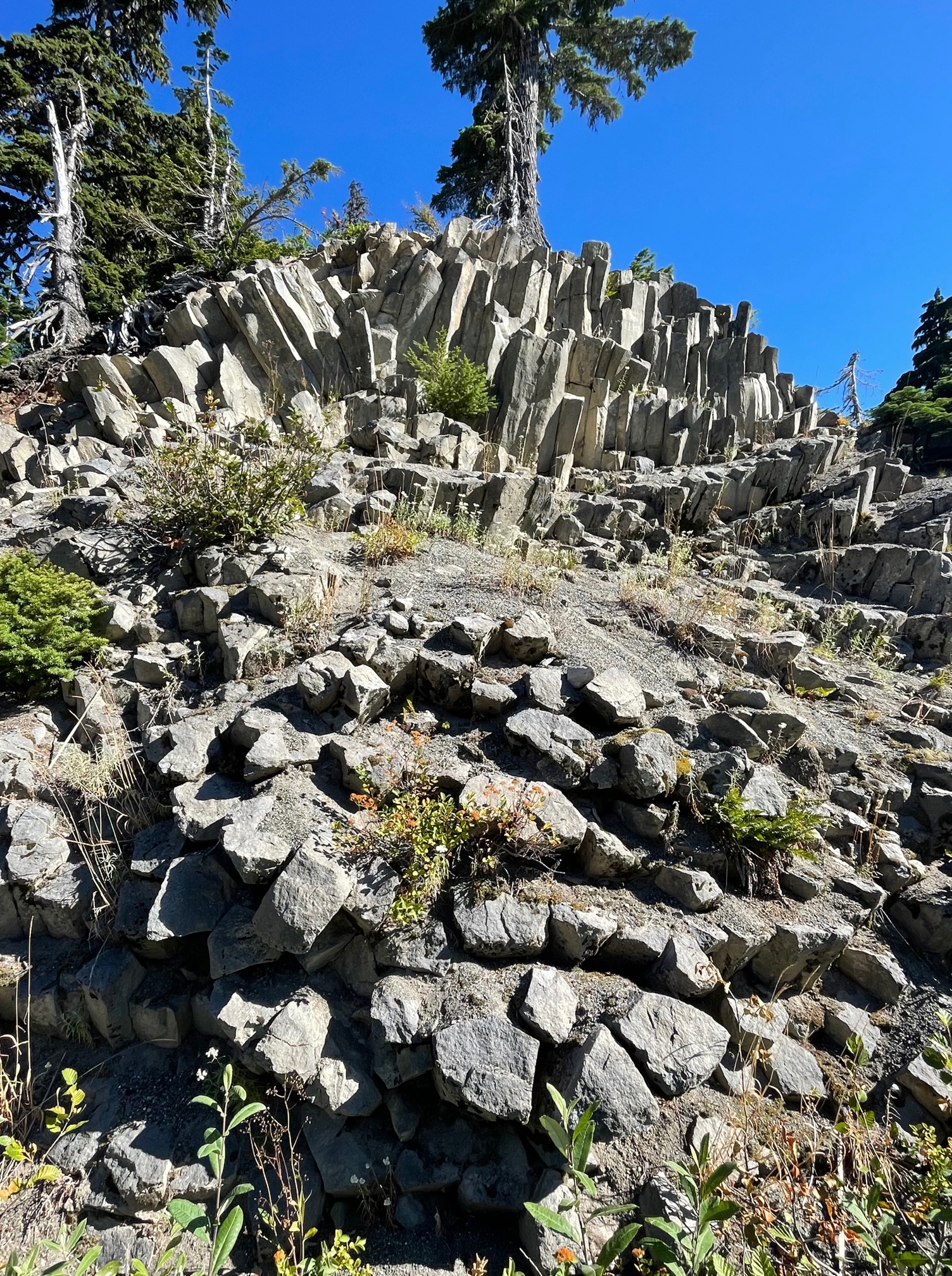
Most curious were extrusions of andesite columns, almost geometrically interlocking columns of volcanic rock quite similar in appearance to those of Giant’s Causeway in Northern Ireland (Google that if you’re unfamiliar with this World Heritage Site). These are apparently formed from melted rock that solidified after being forced to the surface. Check out this explanation on how andesitic columns are formed if you’re curious!
After Picture Lake, we ventured further up the mountain, yet again negotiating a series of rather harrowing switchbacks, to come to Austin Pass, a most picturesque vantage point over the surrounding mountain peaks, whose fir-forested slopes plunge into a central lake and burbling stream. Yet again, the butterflies were the dominant attraction, with an American Dipper finally delivering some much-desired avian intrigued. As we shuffled in single file downstream, the dipper appeared quite sleepy (and fat) and actually tolerated our close proximity. On the way back, however, it perked right up and was actively hunting in the turbulent rock pools, and so we stood awhile and watched it in action.
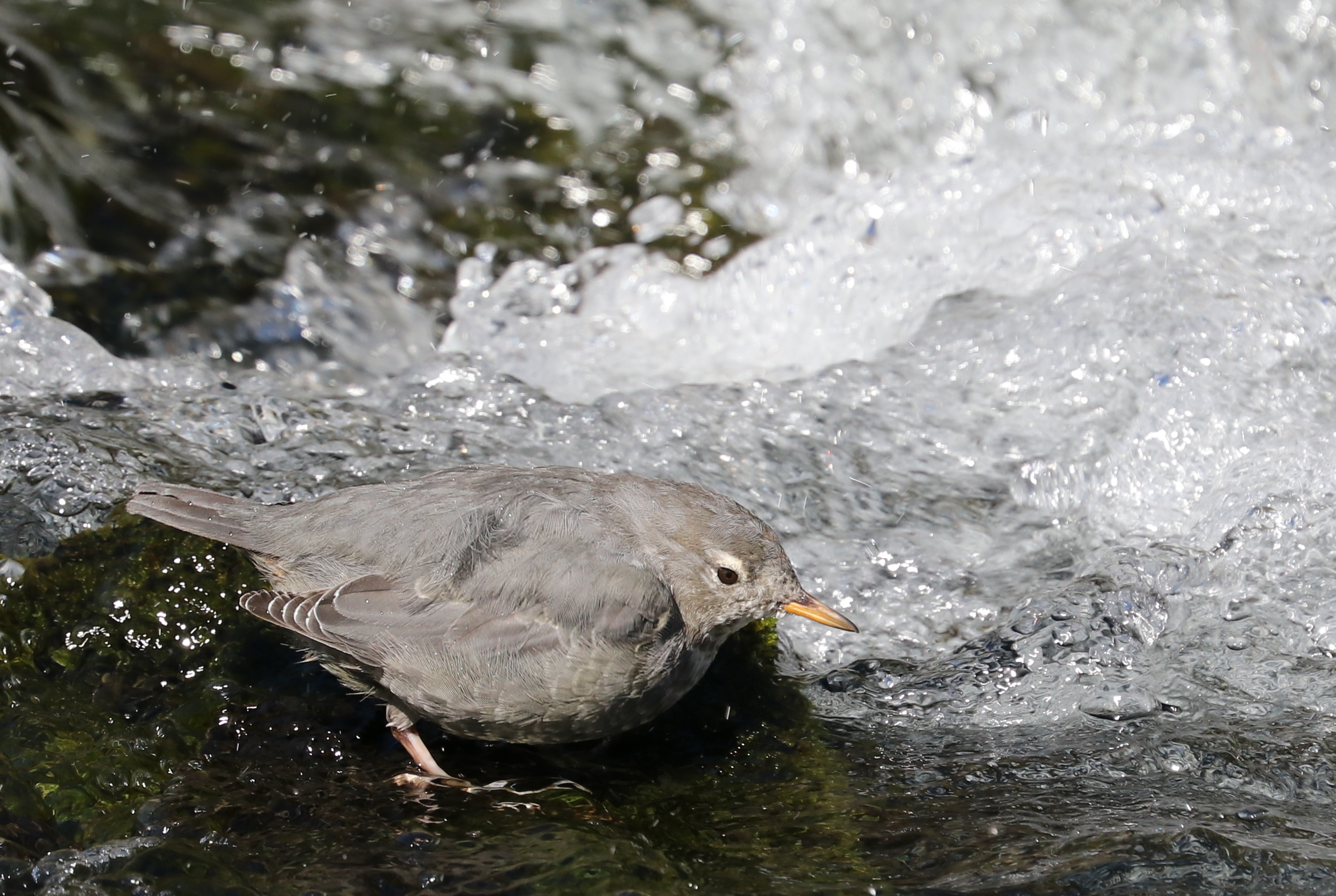
We also saw a Yellow-rumped Warbler catching flies; a couple of American Crows and Common Ravens (most likely regulars to the lookout point and its crowds of lunch-wielding tourists); and a small flock of Vaux’s Swifts, which sliced so quickly overhead that by the time I called attention to them, they’d receded into the distance. It’s a lucky thing that there are only three species of swifts in this neck of the woods: the diminutive size and light brown coloration of the Vaux’s Swifts make them an easy ID.
After a hike and lunch at Austin Pass, we made our way to the final stop for the day, Artist Ridge. And if we thought we’d been treated to glorious views before, it was here that we were truly left speechless. I doubt there was a single person on the excursion who spared their problems a single thought in the face of such majesty…

From here, we completed a rather ambitious hike—certainly challenging for anyone prone to vertigo—along steep, rock-littered slopes to a final vantage point that offered us unencumbered views of Mount Baker and its great white skirts of glaciers.
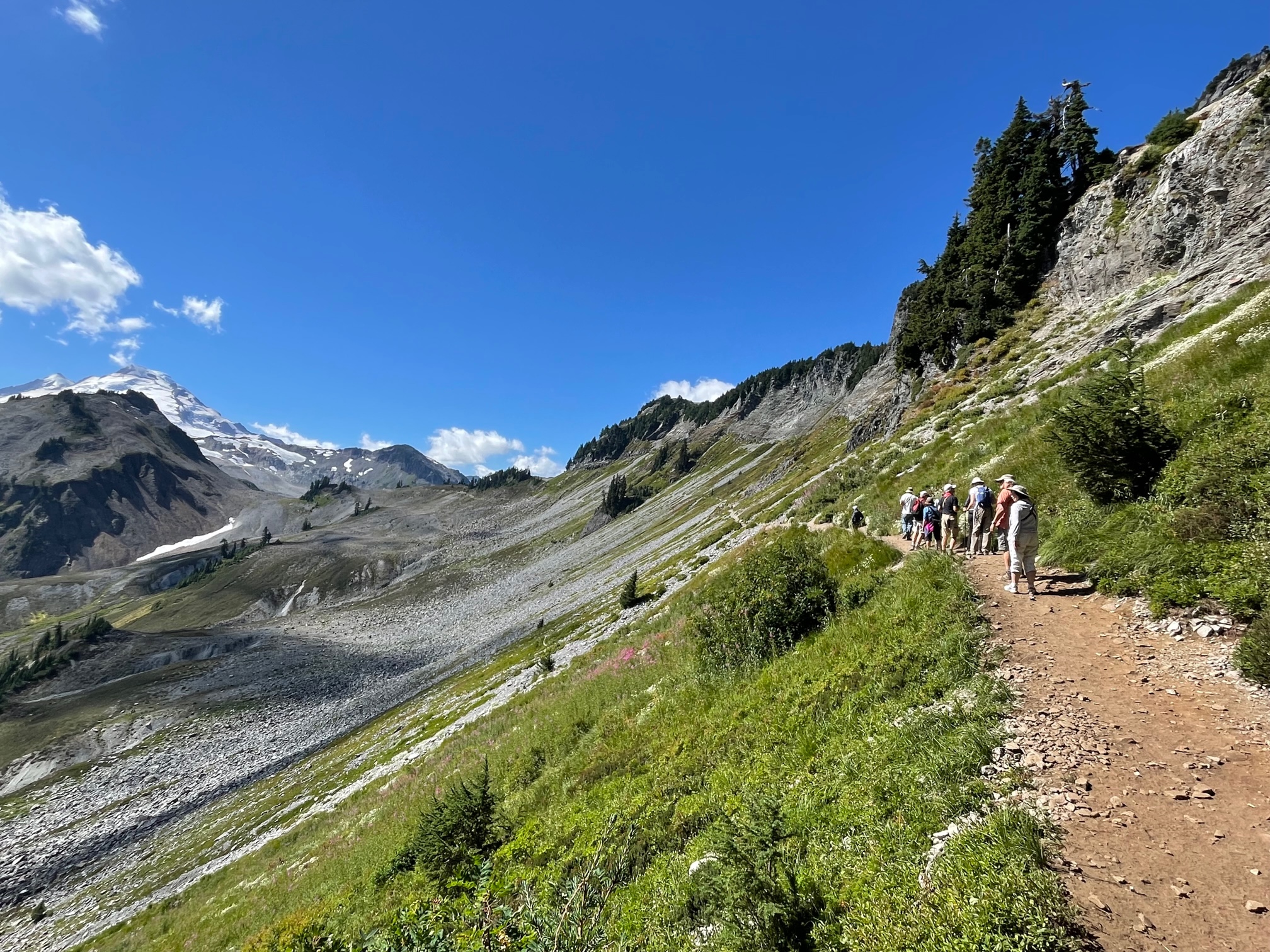
Unfortunately, the mountain goats that had been spotted here a few days prior were nowhere to be seen. But, once again, with eyes filled to the brim with staggeringly beautiful landscapes and nature’s taste for flamboyant fashion, it was mighty difficult to be displeased with any absence of birdlife.


Thea Beckman
More photos on Flickr.

 Delta Naturalists Society
Leave a comment